
Everything you need to know about sandblasting techniques
Sandblasting is a surface cleaning and treatment method widely used in various industries. This technique involves projecting an abrasive material onto a surface at high pressure, which effectively eliminates contaminants such as rust, or paint, limescale and other impurities. It offers numerous possibilities and can be adapted according to the specific needs of each project. In this article, we will present the main aspects related to sandblasting, as well as its advantages and applications. This article is from the cryogenic blasting.
HOME > CRYOGENIC CLEANING > DRY ICE BLASTING > SANDBLASTING
Sandblasting basics: equipment and materials
To properly implement the sandblasting technique, it is essential to have the right equipment and materials. Here are the key elements to consider:
- The sandblasting machine: There are several types of sandblasting machines, designed for different uses and work scales. We generally distinguish between suction blasters, pressure blasters, air abrasive blasters (low-pressure blaster) and water abrasive blasters. Each type has its own specifications and is suited to certain applications.
- Compressed air: essential for abrasive projection, it must be of high quality: dry and refrigerated
- The abrasive: The choice of abrasive used in the sandblasting process is crucial, as it determines the effectiveness and quality of the results obtained. The most commonly used abrasives are sand, steel shot, baking soda, and glass beads. Each abrasive has its own characteristics and is suitable for specific applications.
- Personal protective equipment (PPE) : Sandblasting can generate high levels of noise and dust, as well as risks associated with pressurized jets. It is therefore essential to wear protective equipment such as sandblasting helmets, noise protection, gloves to protect operators during their work, a sandblasting suit, and a supply of fresh air for the operator: ventilated helmet with filters...

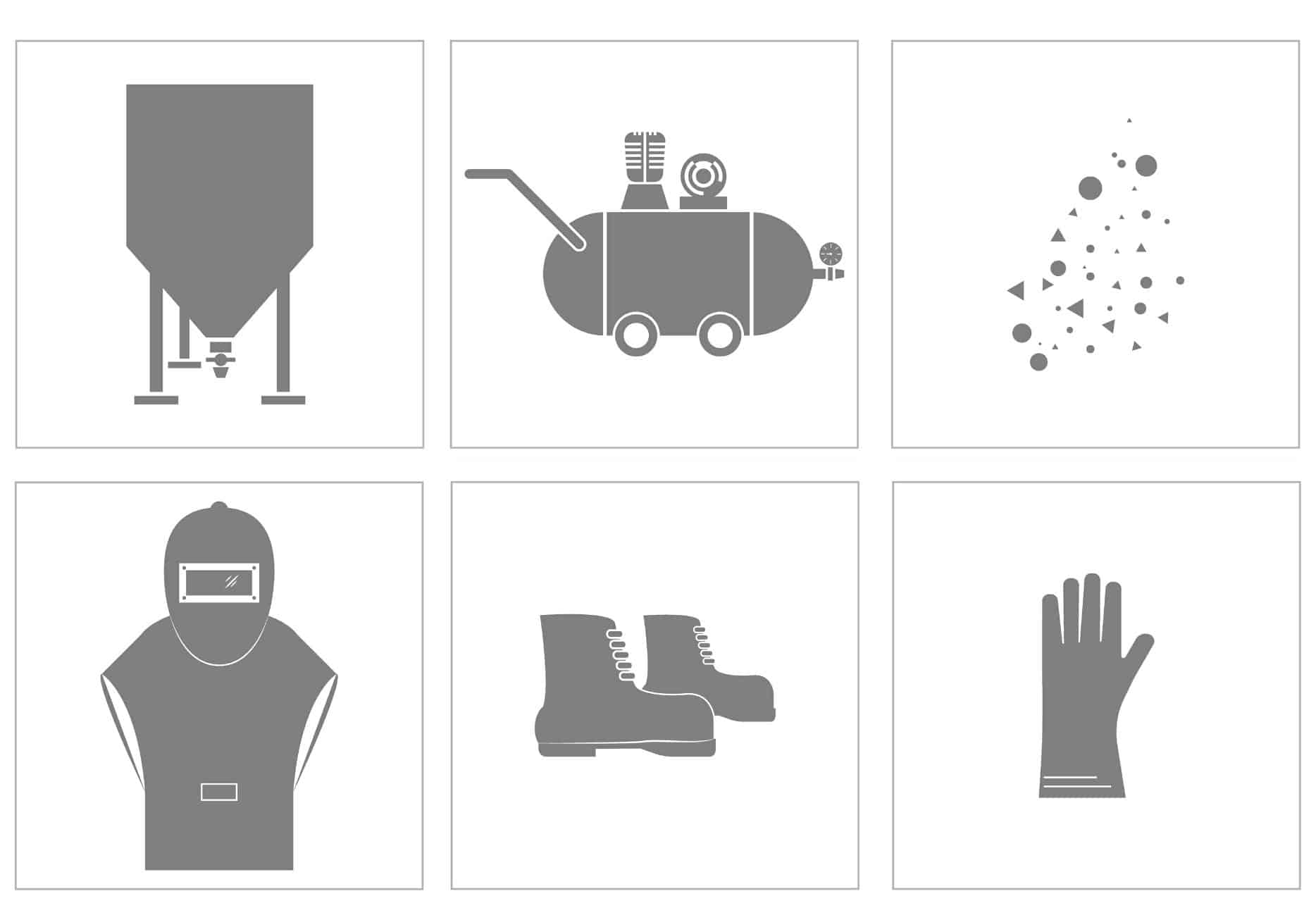
To perform sandblasting, you need a sandblaster, compressed air, abrasive, PPE...
Different sandblasting techniques
Depending on the project requirements and the characteristics of the surface to be treated, different sandblasting techniques can be used:
- Dry sandblasting : This method involves projecting the abrasive without the use of water or other liquids. It is particularly used to clean metal surfaces before painting, eliminate rust, and strip stone or concrete facades. It can also be performed in a booth with sleeves.
- L'soda blasting: This process uses a mixture of air and abrasive at low pressure, making it a gentler and less aggressive sandblasting technique for delicate materials such as wood and epoxy coatings. Air abrasive blasting is also suitable for cleaning artwork or historical monuments.
- Water abrasive blasting: In this method, the abrasive is mixed with water before being projected onto the surface to be treated. This combination reduces the amount of dust generated during sandblasting and provides gentler cleaning without damaging the materials. Water abrasive blasting is commonly used for cleaning stone facades or surfaces sensitive to moisture.
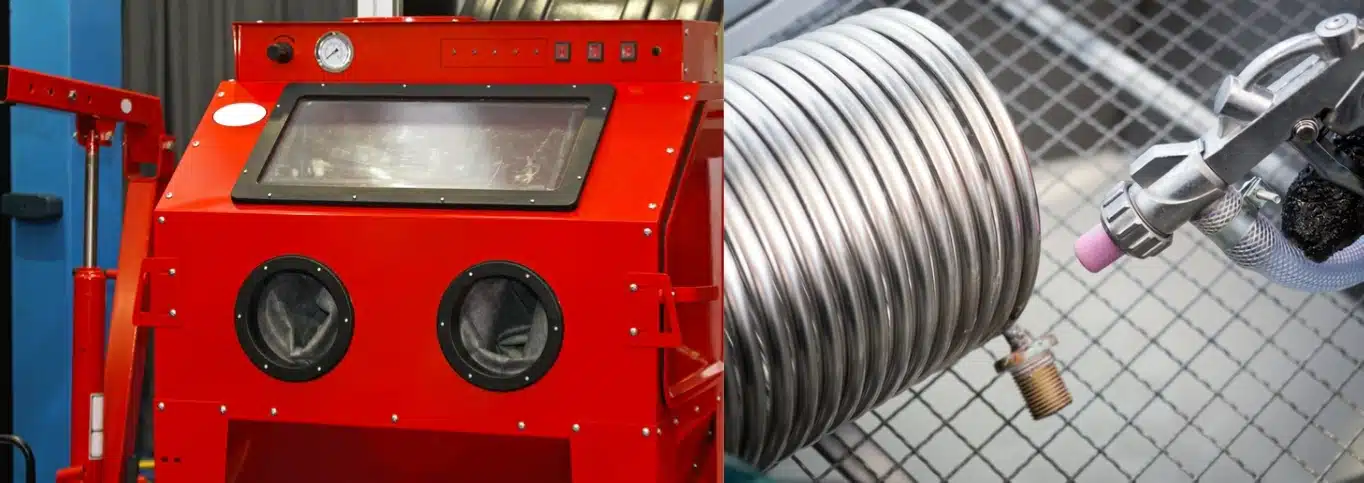
Sandblasting can take different forms. Examples: sandblasting booth with sleeve on the left, suction sandblasting gun on the right. In the latter case, the gun is equipped with two hoses: thanks to the venturi system, compressed air sucks in and projects the abrasive coming from the second hose...
The benefits of sandblasting
Sandblasting offers several benefits compared to other surface cleaning and treatment techniques:
- Effectiveness: Sandblasting allows rapid and effective removal of rust, or paint, limescale and other impurities existing on a surface, which significantly improves its visual appearance and extends its lifespan.
- Versatility: The sandblasting technique can be adapted to different work scales and various types of materials such as wood (prefer using an air abrasive blaster for non-destructive and fine work), metal, or stone, glass and composites. It is simply a matter of choosing the right equipment and abrasives based on the specific needs of each project.
- Environmental responsibility: By using eco-friendly abrasives et recyclable: sandblasting can minimize its environmental impact and promote environmentally responsible practices.
The applications of sandblasting
Sandblasting is used in a wide variety of industries and sectors for various applications:
- Stripping and preparing metal surfaces: Before painting, galvanizing, or other treatments, sandblasting removes rustoperation, theoxidation and other contaminants on metal parts, while creating a rough surface that promotes coating adhesion.
- Building renovation and historical monuments: Sandblasting is commonly used to clean and restore stone, brick, concrete facades, and other materials susceptible to damage from weather conditions or the passage of time.
- Glass cleaning and decoration : Through sandblasting, it is possible to create decorative effects on glass such as engravings, opaque patterns, and reliefs.
- Anticorrosion treatment: By removing rust and improving the adhesion of anticorrosive coatings, sandblasting helps protect metal structures against corrosion and extends their lifespan.
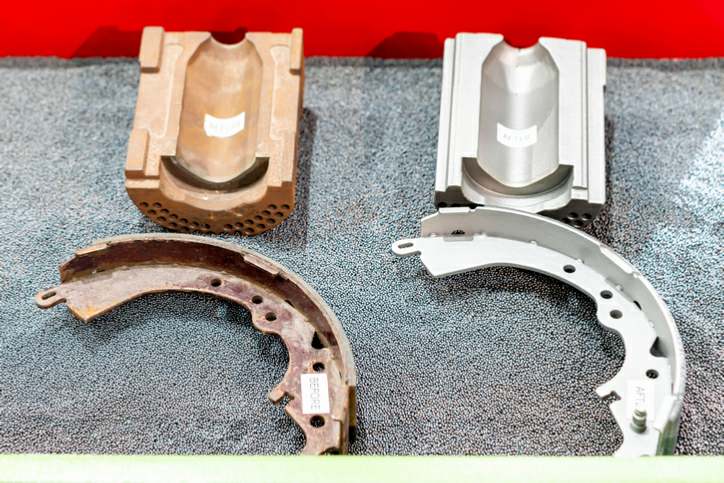
The applications of sandblasting are numerous...
Sandblasting in aerospace and automotive industries
In the aerospace and automotive industries, sandblasting is used to clean mechanical parts, remove paint from car bodies, prepare surfaces before anticorrosion treatment, and perform fatigue tests by generating micro-cavities on materials. The choice of abrasives and equipment must be adapted to the specific needs of each application and the constraints of the sector.
Sandblasting in the marine industry
Boats are frequently exposed to difficult conditions in marine environments, which can lead to rapid deterioration of their hulls and internal structures. Through sandblasting, it is possible to eliminate contaminants on wood or metal surfaces (such as algae, crustaceans, and salt deposits) and prepare these surfaces for painting, repair, or application of protective coatings.
Factors influencing sandblasting quality
To achieve optimal results when sandblasting, several factors must be considered:
- Projection pressure: Pressure that is too low will not effectively remove contaminants, while pressure that is too high risks damaging the treated surface. It is therefore important to adjust the pressure based on the type of material and the surface condition.
- Projection distance: The quality of sandblasting also depends on the distance between the nozzle and the surface being treated. A distance that is too short can cause damage to the substrate, while a distance that is too long reduces the effectiveness of the treatment.
- Abrasive selection: As mentioned previously, it is essential to select an abrasive suited to both the surface characteristics and the project objectives. An abrasive that is too mild will not properly remove contaminants, while an abrasive that is too aggressive risks damaging the treated material.
- Projection angle: The angle at which the abrasive is projected onto the surface influences the sandblasting result. A projection angle that is too low can result in an undesirable polishing effect, while an angle that is too high will limit cleaning effectiveness.
In summary, sandblasting is an extremely versatile and effective surface cleaning and treatment technique. Thanks to its adaptability to different materials and applications, it is an optimal solution for many industrial or architectural projects.
Good to know
It should be noted, however, the importance of correct and controlled use of this technique to ensure operator safety and preserve the integrity of treated surfaces.
Safety considerations should be a priority when implementing sandblasting. Operators must be trained to properly handle equipment and must always wear appropriate personal protective equipment. Furthermore, it is essential to ensure that the work environment is well ventilated and, if possible, to perform sandblasting operations in a confined space to limit the dispersal of abrasive particles into the air, which could pose a health risk.
From a technical perspective, a preliminary assessment of the surface to be treated is essential to determine the most suitable sandblasting method. This assessment will take into account the nature of the material, its condition, and the type of contaminants to be removed. The choice of machine type, abrasive, and projection parameters (pressure, distance, angle) will then be made accordingly.
It is also crucial to consider the environmental impact of sandblasting. Although some abrasives are eco-friendly and recyclable, others may be harmful to the environment. It is therefore recommended to prioritize the most sustainable options and implement measures to recycle or properly dispose of sandblasting residues.
In summary, sandblasting is a powerful and versatile technique, capable of meeting a wide variety of surface cleaning and treatment needs. When used correctly, while respecting safety standards and taking environmental considerations into account, it delivers exceptional results, contributing to the extension of material lifespan and improvement of structure aesthetics. To maximize its benefits, a methodical and responsible approach is essential.

On the same topic
Sandblasting on industrial steel structures
Sandblasting is an effective stripping method for industrial structures, allowing rapid removal of rust, paint, and other contaminants from metal surfaces. To learn more about the specific benefits of sandblasting industrial steel structures:, consult our detailed article.
Learn more
- Abrasive Blasting
- Dry ice micro-blasting
- Setting up the dry ice blasting process
- Industrial stripping
- Dry ice blasting
- Dry ice cleaning rust removal
- Dry ice sandblasting


