
M.O.P.A Laser Decaper: Rust Removal Laser
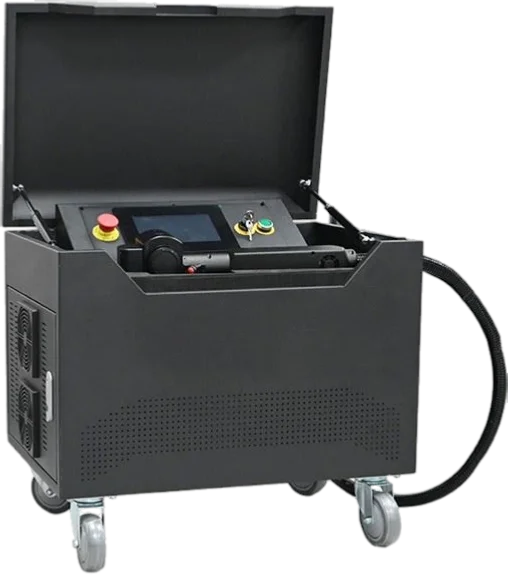
Discover the M.O.P.A Series H laser decaper, compact, mobile and exceptionally powerful. This versatile laser adapts to your needs: rust stripping, aluminum engine block stripping... This page is from the section laser stripping
HOME > LASER CLEANERS & DECARPERS > M.O.P.A LASER DECAPER Series H

Included
- 1X Transport case (Fly Case),
- 1X Firing beam 5 or 10 m depending on model
- 1X Stripping gun (90° or 180° choice at order),
- 1 or 2X Pair(s) of laser protection glasses EN 207 depending on model
- 2 focal lengths,
- 10X silicone protective lens covers,
- Paper & video user manual,
- M.O.P.A Technology,
- Touchscreen control panel,
- Emergency stop
- Operation: 220 V - 50/60 Hz
- 2-year warranty
M.O.P.A Series H laser cleaning machine
- From 23.000 € excluding VAT - Reserved exclusively for professionals and industries
The laser decaper M.O.P.A Series H uses the principle of laser cleaning: enormous energy density, which can be controlled in direction and power through a beam.
Thanks to this energy, the bond between pollutants and the substrate (surface) is destroyed: pollutants are vaporized into microparticles. The surface is clean and free from contamination.
Laser decarpers M.O.P.A Series H allow intervention on a wide range of applications and offer numerous advantages compared to competing models.
MANDATORY ATTENTION :
Before delivery and training on use
- Medical examination for aptitude to use the equipment,
- P.E.R.L Training P.E.R.L (Person Exposed to Laser Risks) for every laser user by an organization qualified to provide LASER training
- Labor law also requires within companies a referent en laser safety (training Competent Person en Laser Safety - Level 3)
M.O.P.A Series H Laser Advantages
- Technology M.O.P.A (master oscillator power amplifier) allows precise adjustment of cleaning power for selective et non-destructive
- Triple-color signal tower (European regulation) regulation European)
- Start with double protection : key and password
- Laser gun 0° ou 90° choice (at order) at no extra cost. Operating indicator on emitted beam LED on emitted beam
- Laser beam: spiral, rectangular, circular (new)
- Motorized gun, new generation: more efficient cleaning fast
- Control screen touchscreen
- 3 languages:French, English, Spanish
Features
1. Quick installation and configuration
2. Intuitive control software
3. Touchscreen control panel
4. Ergonomic laser gun choice: 90° or 0°
5. No noise, minimal operating cost (between 0,30€ to 0,90€/Hour),
6. Maintenance: clean filters 1x per week (rinse with water), change silicone lens protection every 80 hours of use
Technical Specifications
- Output power: 100 to 500 w
- Electrical consumption: 400 to 2000W
- Pulse energy: 1,5 to 50 mJ
- Long fiber optic cable: 5 or 10 m depending on model
- Frequency range: 1-4000KHz | 10-3000KHz (H500)
- Pulse duration: 10-500 ns
- Work area dimensions: 100 x 20 mm | 200 X 20 mm | 300 X 20 mm depending on model
- Cooling system: Air-cooled (4 fans: 2x in, 2x out) or water cooling (depending on model)
Dimensions and Weight
- Dimensions:see table below
- Weight: 30 to 60 kg
Accessories
- Gun 90° or 180° choice
- Laser fiber cable: 5 m or 10 m depending on model
- 1 or 2 pair(s) of laser protection glasses EN 207 depending on model
- Focal lengths: X2
- 10 silicone lens protections
- Wheels X4
LASER CLEANERS: AIR COOLING
MOPA : this laser cleaner offers great flexibility in adjusting pulse parameters, allowing precise control of the cleaning process for various materials. Particularly suitable for rust stripping even on very thin sheet metal.
Multimode : emits a beam containing multiple light propagation modes, which affects energy distribution in the beam. The latter is much more suitable for restoring delicate surfaces: plastic molds, wood, monuments...
| Models | H100 | H200 | H200/5 | H300 | H300/5 | H300/15 | H500 | H500/5 | H500/15 | H500/50 |
|---|---|---|---|---|---|---|---|---|---|---|
| Operating mode | Pulsed | Pulsed | Pulsed | Pulsed | Pulsed | Pulsed | Pulsed | Pulsed | Pulsed | Pulsed |
| Wavelength in nm | 1064 | 1064 | 1064 | 1064 | 1064 | 1064 | 1064 | 1064 | 1064 | 1064 |
| Source type | MOPA | MOPA | Multimode | MOPA | Multimode | Multimode | MOPA | Multimode | Multimode | Multimode |
| Laser power | 100 W | 200 W | 200 W | 300 W | 300 W | 300 W | 500 W | 500 W | 500 W | 500 W |
| Fiber optic length | 5 m | 5 m | 5 m | 5 m | 5 m | 5 m | 5 m | 10 m | 10 m | 10 m |
| Pulse energy | 1.5 mJ | 2 mJ | 5 mJ | 2 mJ | 5 mJ | 15 mJ | 1.5 mJ | 5 mJ | 15 mJ | 50 mJ |
| Cooling | Air | Air | Air | Air | Air | Air | Air | Air | Air | Air |
| Storage temperature | -10/60°C | -10/60°C | -10/60°C | -10/60°C | -10/60°C | -10/60°C | -10/60°C | -10/60°C | -10/60°C | -10/60°C |
| Operating temperature | 0-40°C | 0-40°C | 0-40°C | 0-40°C | 0-40°C | 0-40°C | 0-40°C | 0-40°C | 0-40°C | 0-40°C |
| Input power | 220V 50-60Hz | 220V 50-60Hz | 220V 50-60Hz | 220V 50-60Hz | 220V 50-60Hz | 220V 50-60Hz | 220V 50-60Hz | 220V 50-60Hz | 220V 50-60Hz | 220V 50-60Hz |
| Electrical consumption | 400 W | 700 W | 700 W | 900 W | 900 W | 900 W | 2000 W | 2000 W | 2000 W | 2000 W |
4 chassis options
Choose the chassis suited to your needs
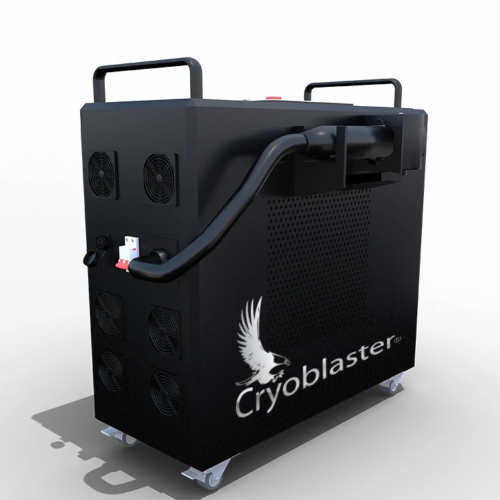
- Dimensions: 450 X 250 X 520 mm
- Weight H100 → H300/10: 30 kg
- Weight H500 → H500/50: 40 kg
- Gun 90 or 180°: yes
- Gun weight: 1-1,5 kg depending on model
This standard chassis is compact and lightweight: only 30 to 40 kg. It allows you to carry a laser source from 100 to 500 w.
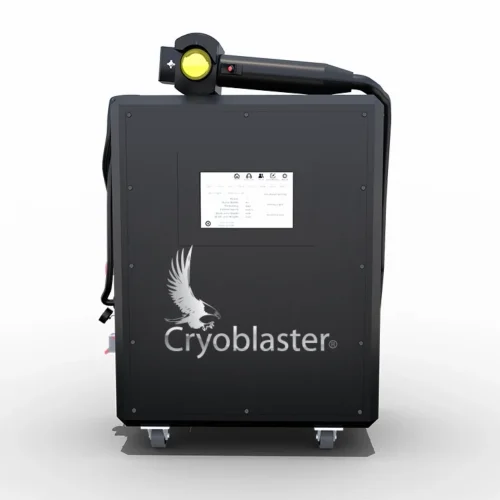
- Dimensions: 440 X 185 X 570 mm
- Weight H100 → H300/10: 30 kg
- Weight H500 → H500/50: 40 kg
- Gun 90 or 180°: yes
- Gun weight: 1-1,5 kg depending on model
This modular chassis gives your laser cleaner excellent flexibility.

- Dimensions: 440 X 280 X 600 mm
- Weight H100 → H300/10: 30 kg
- Weight H500 → H500/50: 40 kg
- Gun 90 or 180°: yes
- Gun weight: 1-1,5 kg depending on model
Compact and robust chassis specially designed to be easily transportable.
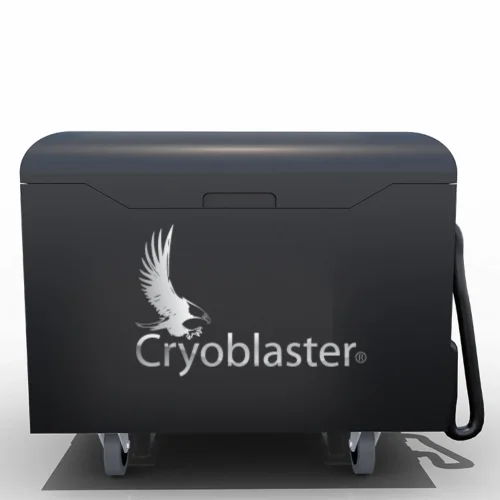
- Dimensions: 440 X 280 X 600 mm
- Weight H100 → H300/10: 55 kg
- Weight H500 → H500/50: 60 kg
- Gun 90 or 180°: yes
- Gun weight: 1-1,5 kg depending on model
Compact and rigid chassis designed to provide good stability and protection for the gun and fiber optic cable.
APPLICATION EXAMPLES
1. Stripping of rust on metal surfaces;
2. Removal of paintfor preparation from surfaces;
3. Removal oil,: stains, grease...
4. Removal of coatings (varnish...);
5. Cleaning welds;
6. Cleaning monuments;
7. Etc
VIDEOS
Rust and paint stripping - Degreasing | 2 Min 34 s - Setting: Spirals 30 x 3 mm
Brief introduction to the M.O.P.A Series H laser decaper and laser cleaning technology in general
Anti-static techniques traditionally used by professionals in the the industrial du cleaning is numerous and varied. However, they mainly involve the use of products et mechanical solutions such as sand blasting.
Yet, given growing awareness of protect and environmental safety, detergents and chemical products will soon no longer meet the requirements increasingly strict waste, laws, standards and regulations in force in this field.
Today, we must rise to this challenge: solve this problem: find an effective cleaning method, but clean, ecological et environmentally respectful of the environment and equipment.
One of the most reliable and effective solutions is cleaning using advanced laser technology: which, like dry ice cleaning, offers numerous and essential advantages:
- this process is non-abrasive,
- no contact with the surface,
- no thermal effect,
- and non-abrasive, it is also suitable for all types of materials.
Thanks to these unique and essential characteristics, the Laser Stripper M.O.P.A Series H mixed powerful, but respectful of the surface and the environment.
It thus achieves the resolution of numerous cleaning and restoration problems that other techniques cannot claim to solve.
Advantages of laser cleaning technology
Professional cleaning using laser technology laser presents advantages obvious and unique advantages, superior to so-called "traditional" cleaning methods known such as: cleaning by action mechanical, by stripping chemical, by projection solid (blasting) or liquid (high pressure) and by ultrasound at high frequency.
- "Green" cleaning method, laser cleaning is healthy and environmentally friendly, and requires no use of chemical agents (solvents) and detergent solutions, which may be aggressive and harmful (to surfaces and the environment).
- The only waste caused by this technique amounts essentially to a reduced volume of "solid powder", therefore easy to store and especially recyclable: a major and necessary advantage for an ecological approach, which prevents environmental pollution caused by chemical cleaning.
- Furthermore, traditional cleaning methods in terms of cleanliness often require contact, or mechanical action on the surface of the object to be cleaned, an action which, by generating scratches et porosity, damage this surface and promote the adhesion of pollution particles. This drawback becomes non-existent thanks to the non-abrasive nature of the laser.
- The functionalities of the Laser Stripper Series H allow you at the same time for selective and precise cleaning of pollutants on the object's surface, while guaranteeing you will not damage in any way, and thus preserve, the surface itself.
- On the other hand, the M.O.P.A Series H laser stripperalso allows cleaning of parts that would be difficult to access through traditional methods: its laser beam is transmitted by fiber optic and offers the possibility of being mounted on a robot, thus allowing the performance ofremote operations in a safe manner for personnel.
- The high performance and efficiency of laser cleaning allow you to optimize save your time.
- Finally, the M.O.P.A Series H laser stripper is an economical tool: an hourly operation cost of approximately 0,30-0,90 euros/hour.
Principle of laser cleaning technology
The effectiveness of the laser cleaning process, which depends on the characteristics of the optical pulse generated by the laser beam, is based on the photo-physical reaction caused by the interaction between the high-intensity beam, the short-pulse laser and the pollution layer.
The operation of the laser stripper, the physical principles of this technology, can be summarized by the following steps:
a) The beam emitted by the laser is absorbed by the layer of contamination on the surface to be treated.
b) The absorption of a large amount of energy by the contamination layer forms a plasma* rapidly expanding (highly ionized unstable gas), which produces a shock wave.
c) The shock wave itself causes the fragmentation and elimination of pollutants.
d) The light pulse width needs to be short enough to prevent heat buildup that would damage the treated surface.
e) Tests performed with the laser strippers M.O.P.A Series Hshow that when oxide is present on the metal surface, plasma is generated at the metal surface.
* : Plasma is only produced when the energy density is above the "threshold", a threshold that depends on the pollutant layer or oxide layer being removed. This threshold effect is fundamental for effective cleaning while ensuring the safety of substrate materials (surface to be treated).
It is also essential to respect the substrate threshold; the energy density used to remove pollution must not exceed this threshold, otherwise the laser will damage it.
In conclusion: the Series H Laser Stripper offers the opportunity to adjust each of its parameters: from power in percentages, frequency, the width of the area to be treated, to the type of beam (spiral or rectangular). It should be noted that the Series H laser cleaner automatically adjusts the number of spirals in an appropriate manner, according to the frequency and power used for a completely optimized cleaning result!
of compressed air used depending on the equipment chosen It is important to note that the laser parameters must be adapted to the situation, so that the energy density of the light pulse is strictly between the two thresholds.
RELATED PRODUCTS

Other articles on the same topic
- What are the advantages of laser cleaning compared to chemical stripping?
- What are the environmental impacts of laser cleaning?


