
What are the environmental impacts of laser cleaning?
Discover in the article below the impact of laser cleaning on environmental protection as well as the 4 methods of cleaning by light radiation.
This article is from the laser stripping section
This article is from the laser stripping
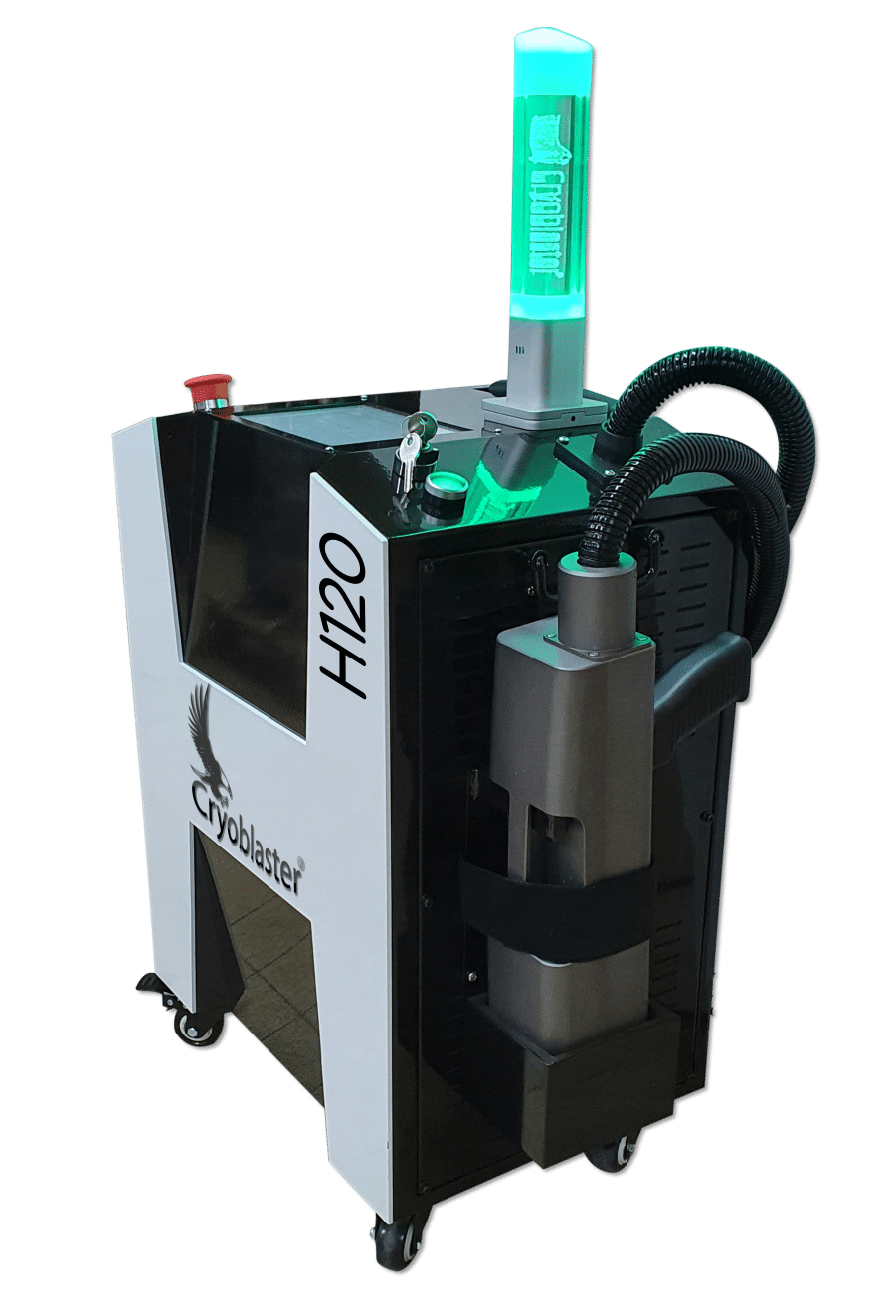
Video of laser stripping a wooden handle (hammer) covered with automotive paint: Laser H120 Cryoblaster®
Laser cleaning and the environment: why should you care?
As the 6th largest economy in the world, the France has made enormous progress in technological and industrialization fields.However, the industrial progress goes hand in hand with environmental degradation de friendly, which is why environmental protection laws and regulations have been tightened in recent years .
La universal ecological revolution has a certain impact on the economy, and the key is to change traditional production methods to generate as little pollution as possible.
With technological advances, manufacturers are gradually exploring a variety of environmental protection solutions, and laser cleaning technology is one of them.
Laser cleaning is a new surface restoration technique that has advanced tremendously over the past ten years.This revolutionary cleaning technique is gradually replacing many so-called "traditional" cleaning methods in many fields, thanks to its numerous advantages.
Traditional cleaning methods and laser cleaning
So-called "traditional" cleaning methods include the methods of:
- cleaning mechanical ;
- cleaning chemical and;
- cleaning by ultrasound
The method of mechanical cleaning uses means such as :
- scraping;
- brushing;
- high-pressure cleaning;
- blasting (example: metal blasting) to remove pollutants from surfaces
The "wet" chemical cleaning method uses a cleaning agent to eliminate pollutants:
- by spraying;
- by immersion
The ultrasonic cleaning method involves soaking parts in a cleaning agent:
- the ultrasonic vibration effect is used to remove dirt
Currently, these three cleaning methods are still dominant on the French market, but they produce pollutants to varying degreesand entail environmental protection requirements as well as costly reprocessing obligations.
Laser cleaning technology consists of irradiating the surface of the part to be treated at high frequency with a high-energy laser beam:
- dirt, rust or coating (varnish, paint, etc.) evaporates or is stripped instantly.
The rapid and effective removal of pollution from the surface without generating secondary waste makes laser cleaning an extremely clean process.
The laser is characterized by high ease of use and adaptability, thanks to:
- great work ergonomics,
- an adjustment range allowing you to regulate the stripping power according to the nature of the pollution and the substrate

Blasting, although very effective, is a major source of environmental pollution...
4 laser cleaning methods and many advantages
1. Dry cleaning, that is, direct decontamination by pulsed laser radiation;
2. Laser + liquid film method, that is, first depositing a layer of liquid film on the substrate surface, then using laser radiation for decontamination.
When the laser irradiates the liquid film, it heats up rapidly, causing "explosive" vaporization, and the induced shock wave releases dirt from the substrate surface.
3. The laser + inert gas method, that is, blowing an inert gas on the substrate surface while laser radiation removes dirt from the surface.
Pollution fragments are carried away from the surface to avoid re-contamination and oxidation.
4. Using the laser to loosen the dirt, then using a non-corrosive chemical agent for better finishing
Currently, so-called traditional cleaning methods (chemical, mechanical) fall far short of meeting the needs of French industrial production.
Compared to traditional cleaning methods, laser cleaning is a so-called "green" cleaning method that has incomparable advantages:
- is not need to use chemical products and cleaning solution,
- waste is essentially solid "powder", in small volumes, easy to store, and recyclable
- is not photochemical reaction photochimique,
- is not de consumable,
- is not de noise dry ice. It addresses environments where cleaning control takes priority over raw power, particularly when the goal is to preserve surface integrity while ensuring effective and reproducible cleaning. contaminants of the environment, and...
- does not harm the health of operators
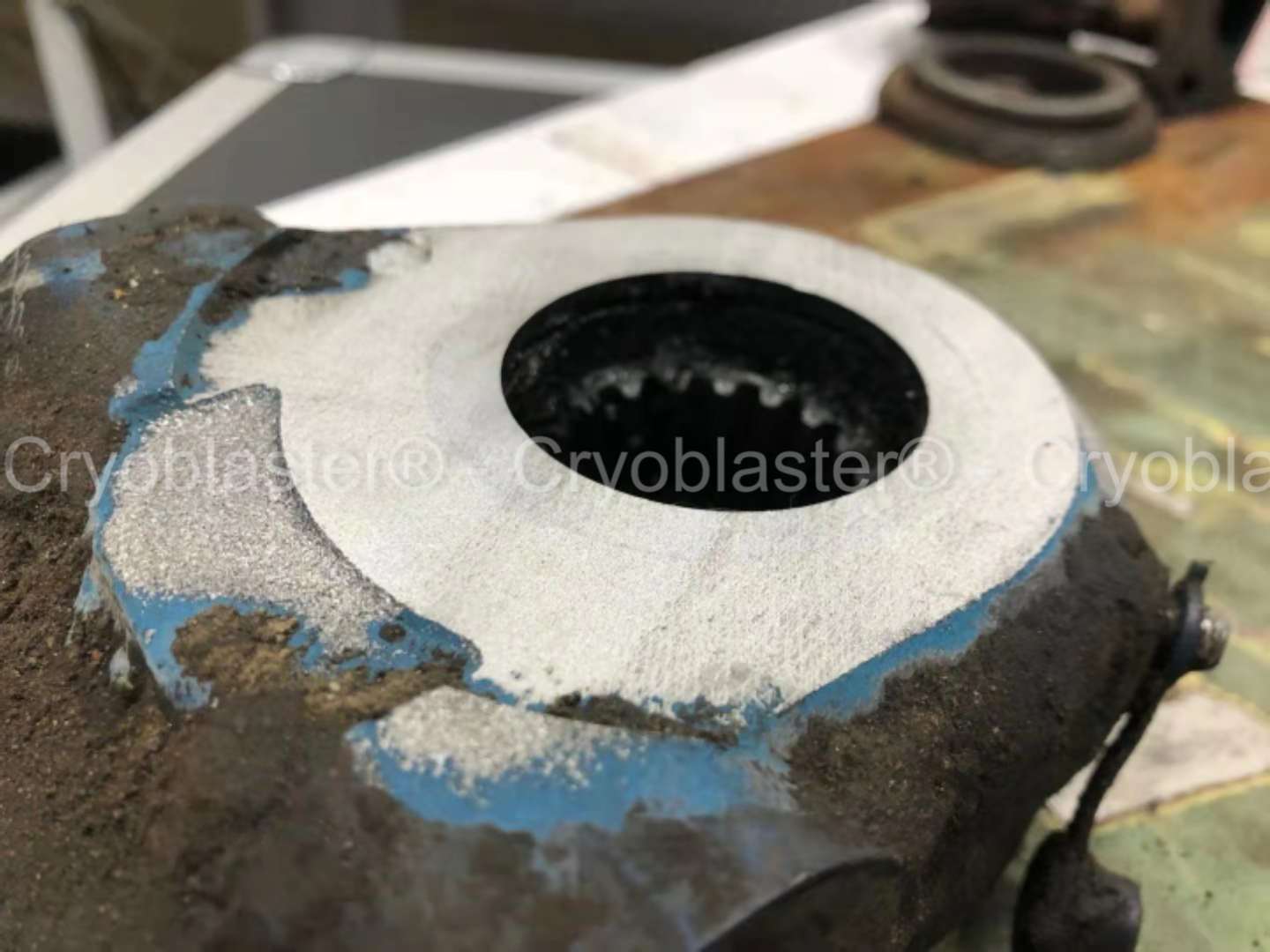
Laser cleaning has a positive impact on the environment: drastic reduction of waste...
Some applications of laser cleaning
Laser cleaning is widely used in various fields:
1) Mold cleaning
The laser can clean molds (plastics industry) without contact, which ensures the durability of the production tool
Moreover, thanks to its various adjustable parameters, you can ensure:
- treatment precision,
- removal of submicron dirt particles that cannot be removed by traditional cleaning methods.
2) Cleaning in the precision instrument industry
In the precision machinery industry, it is often necessary to remove esters and mineral oil used for lubrication and corrosion resistance of parts, usually by
chemical methods. But chemical cleaning often generates other residues.
Laser de-esterification can completely remove esters and mineral oil without damaging the part surface.
The laser causes "explosive vaporization" of the thin oxide layer on the part surface, resulting in dirt removal instead of mechanical interaction and scratch risks...
3) Rail cleaning
Currently, pre-welding rail cleaning often uses stripping gels, abrasive grinding cleaning...
- Damage to the substrate is severe,
- residual stress is significant,
- a large number of consumables are used each year,
- the cost is high,
All of this results in serious environmental pollution from dust.
Laser cleaning can provide high-quality and efficient ecological cleaning technology for high-speed rail production and solve the above-mentioned problems.
4) Aerospace
Aircraft surfaces must be repainted after a certain period, but the old paint must be completely removed from the substrate before repainting:
- the use of chemical bath stripping is the main method of paint stripping in the aerospace field;
- this method causes a large amount of secondary chemical waste and cannot be performed on site;
- the workload of this process is heavy and harmful to health
Laser cleaning allows effective removal of paint from aircraft. Currently, the technology has been applied to the maintenance of certain high-end models abroad.
There are obviously many other applications, such as rust removal, varnish stripping on wood, etc.
We would be delighted to discuss this with you to organize a trial for your application.
You can contact us at 09 81 37 76 93 or fill out the form on the Contact page.
Also discover our range of Laser Cleaners in the Products section (Menu)
Other articles on the same topic


