
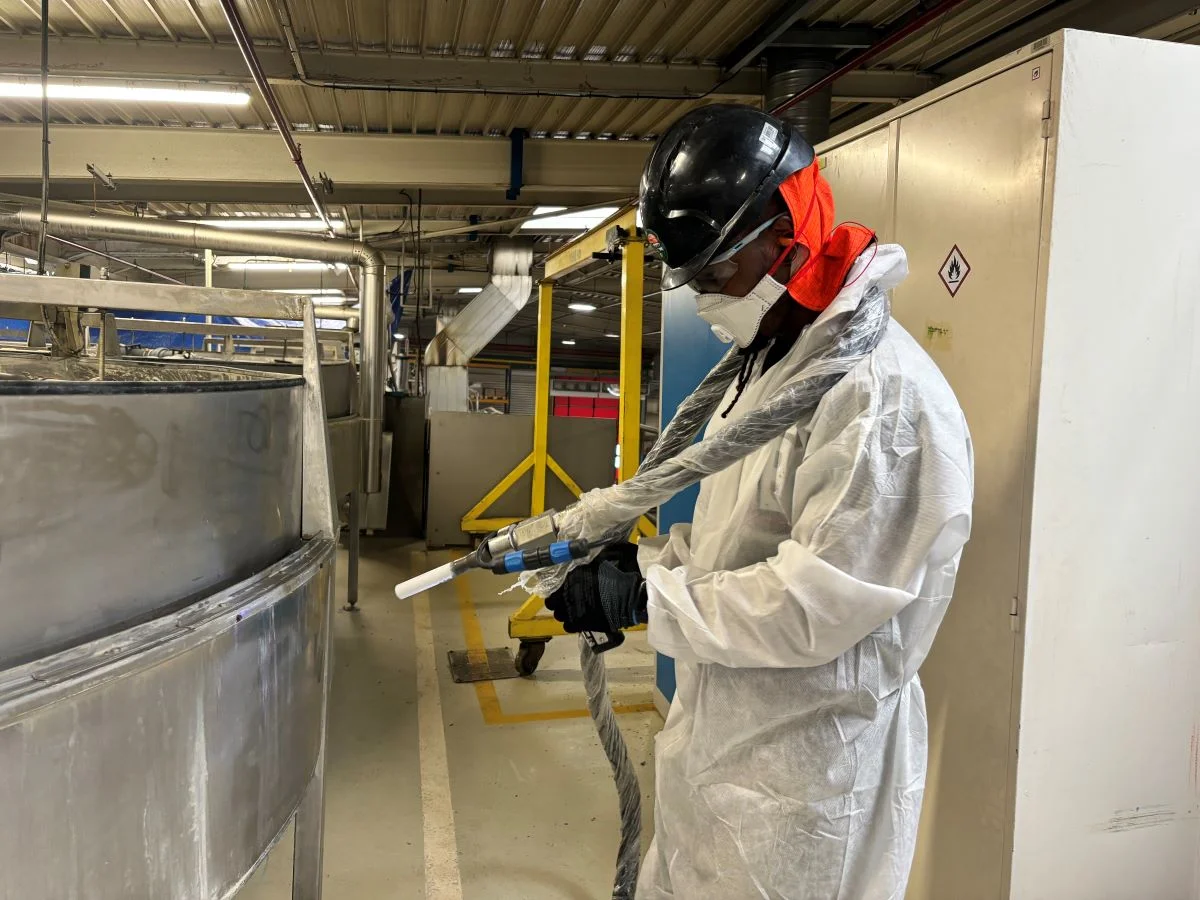
Le cryogenic cleaning has transformed various industries by providing not only unmatched cleaning efficiency, but also substantial improvements in workplace safety conditions. This method uses solid carbon dioxide pellets projected at high velocity to eliminate contaminants without resorting to chemicals or abrasive tools. However, what are the real effects of dry ice blastingon workplace safety? Let's examine this topic in detail.
Introduction to dry ice blasting
Origins and basic principles of dry ice blasting
Le cryogenic cleaning finds its origins in industrial applications where efficient elimination of of dirt is paramount. Unlike traditional methods that use abrasive materials, dry ice blasting dry ice blasting uses solid carbon dioxide (CO₂) pellets. When they strike a surface, these pellets sublimates instantly sublimate, transitioning directly from solid to gaseous state, thus eliminating contaminants through thermal shock et mechanical action.
Common applications
This technology is used in various sectors, particularly automotive, aerospace, manufacturing food, and even municipal cleaning. Its rapid adoption in these sectors is explained by its effectiveness and especially the reduction of associated risks with traditional cleaning.
Assessment of hazards associated with traditional cleaning methods
Chemical risk
Conventional cleaning methods often involve the use of solvents and other chemical substances potentially hazardous to workers. Prolonged exposure can cause various health problems, ranging from skin irritation to chronic respiratory diseases.
Burn and cut risk
The use ofabrasive tools also poses considerable risks of mechanical injuries such as cuts or impacts. Operating machines such as electric sanders exposes workers to constant danger and requires strict safety precautions.
Noise pollution
Cleaning using heavy equipment generates high noise levels that can reach harmful thresholds for hearing. Personnel must then wear personal protective equipment (PPE) specifically designed to prevent hearing damage.

Safety advantages of dry ice blasting
Absence of chemical residues
The main advantage of dry ice blasting is that it uses no chemical products. The protective equipment required to handle toxic solvents becomes obsolete, thus reducing health risks for operators.
Reduction of mechanical risks
With theabsence of abrasive tools, and the reduction, even elimination of disassembly procedures, the risk of cuts or mechanical injury is considerably reduced. Moreover, automated processes minimize direct human intervention, thus decreasing the possibilities of workplace accidents.
Case studies on workplace safety and dry ice blasting
Automotive industry
A major automotive manufacturer adopted dry ice blasting to maintain its molds manufacturing facilities. Previously, manual cleaning led to frequent incidents due to the use of corrosive solvents et sharp tools. After implementing dry ice blasting, workplace accidents decreased by 40%. Workers report a significant improvement in comfort and daily safety.
Food processing plant
In a food packaging facility, long-duration manual cleaning with powerful detergents was a real challenge. Thanks to dry ice blasting, the meatcleaning time was cut in half while eliminating exposure to hazardous chemicals. This resulted in a notable reduction in sick leave related to dermatological respiratory et issues..
Municipal sector
A city opted for dry ice blasting to remove graffiti and other forms of urban vandalism. Previously, municipal workers used harmful chemical solutions, posing risks not only to their own health but also to the local environment. The switch to dry ice completely eliminated these hazards.
Cautions and operational recommendations related to dry ice blasting
Extreme cooling levels
Despite its many advantages, dry ice blasting involves the use of extremely low temperatures (-78 °C). It is imperative to equip workers with thermally insulating gloves and other appropriate protections to prevent frostbite and cold burns.
Particle projection and eye protection
The projection of CO₂ particles can cause splattering. Safety glasses are necessary to protect operators' eyes from possible eye damage. This is a particular concern when treating irregular or delicate surfaces.
Handling and storage of substances
Dry ice pellets must be stored correctly, in a cool and ventilated location, to avoid premature sublimation. Adequate training on handling these substances is necessary to ensure their effectiveness and prevent any risk of incident.
- Use of thermally insulating gloves
- Mandatory wearing of glasses
- Appropriate storage of dry ice pellets
- Continuous and certified training of operators
- Constant supervision during operation
Comparison with other industrial cleaning methods
High-pressure cleaning (water)
Although high-pressure cleaning is effective for certain applications, it presents several disadvantages. The massive use of water carries risks of contamination by mold, et bacteriaflooding damage. Additionally, high pressure can damage treated surfaces. In comparison, dry ice blasting eliminates these concerns, as it leaves no liquid residue
and requires no drying time.
Le sandblasting relies on solid abrasives such as sand or steel shot. These particles can cause significant physical harm through inhalation or direct contact, not to mention the secondary pollution generated. Conversely, dry ice blasting uses volatile pellets that disappear without leaving harmful traces.
Chemical cleaning
Adding various chemical products such as acids and alkalis can have a negative impact on worker health and the environment. Beyond strict requirements for handling and storage rules, these products require laborious neutralization procedures after use. Dry ice blasting bypasses this obstacle through a natural approach and simplifies protocols.
Future prospects for dry ice blasting in improving workplace safety
Technological innovations
The field of dry ice blasting continues to evolve with the introduction of robotic and automated systems capable of targeting hard-to-reach areas. These innovations aim to further improve safety safety by minimizing human intervention. Consequently, this limits potential exposure to existing hazards.
Training and awareness efforts
To fully maximize the benefits that dry ice blasting offers in terms of safety, enhanced training programs must be implemented. The goal is not only to familiarize operators with equipment, but also to cultivate a culture focused on hazard prevention and continuous improvement of working conditions.
For more information about our dry ice blasting training courses, contact us at 04 81 61 02 75
Regulatory impacts
In the long term, one can anticipate that regulatory agencies will adopt more stringent standards regarding the use of industrial cleaning technologies. This could encourage more companies to adopt solutions like dry ice blasting, both for their safety benefits and their environmental respect.
In summary, the countless advantages that dry ice blasting brings, in terms of both efficiency and safety, justify its growing place in various industrial sectors. The future seems destined to see even wider adoption of this innovative technique, paving the way for safer and more productive work environments.


