
Chemical stripping: an effective process that preserves your surfaces!
Chemical stripping is one of the techniquesindustrial blasting that allows surfaces to be restored to their original condition.
By preparing your surfaces, you ensure their longevity and resistance. However, each surface requires an adapted stripping process. Get to know chemical stripping, one of the most effective techniques with superior preservation power.
A process that acts on organic compounds?
This is a chemical stripping process that uses a solution based on solvents, caustic soda, or acid. Applied to the surface being treated, the chemical stripper softens, dissolves, or detaches coatings. The stripper then acts by breaking the molecular chain of organic compounds.
After a wait and action time that vary from 30 minutes to 1 hour, blistering becomes visible. This generally indicates that the surface is ready to be cleaned, either by scraping or water jetting. However, the wait time may be longer.
Depending on the chemical formulation of the stripping solution, the process can be used on a range of surfaces for:
- stripping paint, varnish, resin, or stain;
- deoxidizing ferrous or non-ferrous metals;
- degreasing industrial ovens or specific equipment;
- stripping concrete, walls, and stone;
- renovating building facades;
- stripping ducts and filters.
As for professional applications of chemical stripping, they extend to interior and exterior carpentry activities, construction, the food industry, as well as the aviation and shipbuilding sectors.
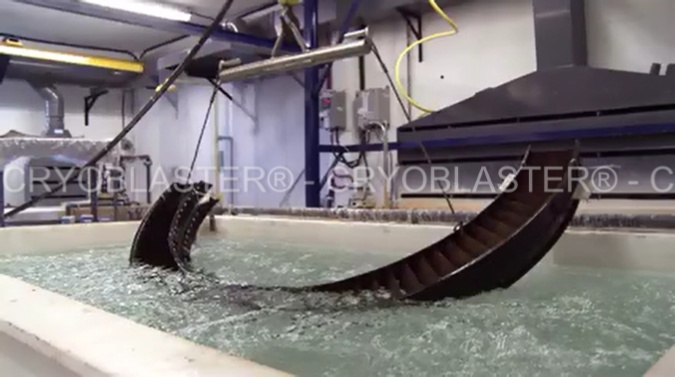
Chemical stripping in the aeronautical industry...
Why choose chemical stripping?
This process has the advantage of being effective while also being economical and non-messy when performed in a closed-loop system. And unlike mechanical stripping, it is ideal for stripping bodywork without affecting glass. Similarly, it is perfect for deoxidizing ferrous metals (metal, steel) and non-ferrous metals (wood, plastic, aluminum) without affecting their dimensions or surface finish.
Chemical stripping is, however, an aggressive process that involves safety requirements.
Safety requirements for the operator and the work environment
Whatever the formulation of the stripper, its chemical nature calls for caution. Indeed, the risks are more or less pronounced depending on the product used. They can cause serious eye and skin irritation and burns, poisoning from inhalation of corrosive vapors, or even fire risks.
The risk increases in a confined environment... Therefore, careful reference to usage instructions is a prerequisite and standard safety measures are essential.
For the operator, standard equipment is based on:
- adequate protection of the face and respiratory tract (mask and safety glasses);
- hands (gloves);
- and parts of the body susceptible to exposure (appropriate clothing).
Safety requirements also concern control of the work environment. The goal is to prevent risks to personnel working in areas treated with chemical strippers. It is also about preventing environmental contamination risks.
Due to the highlighted risks, prioritize well-ventilated work areas to reduce risks from harmful fumes. Furthermore, strippers containing methylene chloride should be avoided, as they are known to be very harmful to health and the environment.
Finally, post-stripping waste must be collected.
Dispose of waste properly—it's good for the environment!
Three types of chemical strippers adapted to your needs
Solvent-based, caustic soda-based, and strong acid-based strippers constitute the three main chemical strippers.
Chemical strippers based on solvents are the most common and are suitable for all surfaces. To increase their effectiveness, apply the stripper in thick coat.
As for soda-based strippers (or chemical bath stripping), their effectiveness is renowned for removing multiple layers of coating in a single application, generally by immersion.
Finally, acid-based strippers are generally used in chemical baths. This process is safer and is particularly suitable for treating hard and thick paints such as epoxy.
As for stripping equipment, a variety of options are available to you...
A classic option would consist of applying a chemical stripper using traditional tools, such as: spatula or putty knife.
Furthermore, spraying solutions using a coating spray pump are common in the range of industrial options. They are essential in the treatment of facades and fuselages.
They also find applications in construction and industry. Still in the industrial range, chemical baths are excellent choices for treating metal parts (brackets, engine components) or hard, thick paints.
A few chemical stripping tips
PTo optimize the in-depth work of the stripping solution, cover the treated surface with a plastic film.
It is always advisable to neutralize the active principle of the chemical stripper. In this case, clean the treated surface, preferably with alkaline water to sterilize and disinfect.


