

If you're new to the world of abrasive blasting, you may be wondering what it is and how it can benefit you. Abrasive blasting, also known as sandblasting, is a process that uses compressed air to propel abrasive materials onto a surface to remove rust, paint, or other unwanted coatings. It's a versatile and effective method for cleaning and preparing surfaces for various applications.
In this comprehensive guide, we'll cover everything you need to know about abrasive blasting, including the equipment, materials, and techniques involved.
What is Abrasive Blasting?
Stripping by soda blasting is a surface preparation technique that uses compressed air to propel abrasive materials onto a surface. The abrasive materials, also called media, can range from garnet, such glass beads, such walnut shells, even baking soda baking soda, and more. The high-pressure media stream effectively removes rust, or paint and other unwanted coatings from surfaces, leaving them clean and ready for further treatment.
Benefits of Abrasive Blasting
Le abrasive blasting offers several advantages, making it a popular choice for surface preparation. Some of the main benefits of abrasive blasting include:
- Versatility : Abrasive blasting can be used on a variety of surfaces, including metal, wood, concrete, and more.
- Effectiveness : The high-pressure stream (up to 7 bars) of media can quickly and effectively remove unwanted coatings, saving as well as with minimal and effort.
- Cost-effectiveness : Abrasive blasting is a cost-effective method compared to other surface preparation techniques.
- Environmental responsibility : unlike chemical stripping, abrasive blasting does not require the use of harmful chemicals, making it an environmentally friendly option.
- Better adhesion: by removing old coatings and rust, abrasive blasting creates a clean surface that allows better adhesion of new coatings. You can also create roughness on the metal for better paint adhesion.


Metal surface: rough surface created by abrasive blasting...
Other Types of Abrasive Media Blasting or... not
There are several abrasive blasting techniques, each with its own unique advantages and applications. Some of the most common types of abrasive blasting include:
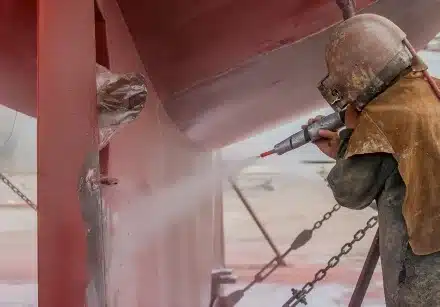
Sandblasting: for heavy-duty operations...
Sandblasting: Also known as sandblasting abrasive blasting, it's the most traditional form of abrasive media blasting. It once involved using sand as the abrasive material. However, sand is now rarely used due to the presence of silica, which causes serious health problems: silicosis.
Today, people use vitrified slag (which makes silica inert), corundum and other media, propelled at high speed to remove unwanted coatings from surfaces. Sandblasting is ideal for heavy-duty applications and is commonly used in industrial environments.

Baking Soda Blasting...
Baking soda blasting (soda blasting): this is a gentler form of abrasive media blasting that uses baking soda as the blasting agent.
It's an non-toxic et environmentally environmentally friendly option, making it a suitable solution for residential and commercial environments.
Baking soda blasting is ideal for removing paint and other coatings from delicate surfaces, such as wood or fiberglass.

Glass Bead Blasting
Glass bead blasting: this involves using small glass beads as the abrasive material. It's a popular choice for cleaning and polishing metal surfaces, particularly for automotive parts, as it leaves a smooth and shiny finish.
Glass bead blasting is commonly used for automotive restoration and maintenance.

Manual Blasting Cabinet...
Garnet blasting: This is a type of abrasive blasting that uses garnet as the abrasive material. Steel shot is very effective at removing rust and other coatings from metal surfaces.
The shot can have a spherical or angular shape, depending on the type of blasting desired. Garnet blasting is a cost-effective option, making it a popular choice for industrial applications. The operation is often performed in a cabinet.

Dry Ice Blasting Operation
Dry Ice Blasting: Another cleaning method to consider is dry ice cleaning, which shares similarities with sand blasting. However, instead of using solid abrasives, dry ice blasting uses dry ice, which is carbon dioxide solidified at an extremely low temperature.
La Carbon dioxide ice has the hardness of chalk and sublimates on impact, meaning it transitions directly from solid to gas state, without passing through the liquid state. This means that on the ground, only the removed contamination remains, with no abrasive residue to clean up. This process offers effective cleaning while being environmentally friendly, making it an attractive option for many applications.
However, dry ice blasting is not suitable for removing deep rust or stripping two-component or epoxy paints. For these applications, cryogenic blasting is the better choice.

Dry Ice Blasting Operation
Dry Ice Blasting: a blasting method that combines the benefits of cleaning and abrasive blasting. A mixture of abrasive and dry ice is created inside the venturi chamber of the blasting gun. The technique uses 10 times less abrasive than abrasive blasting.
Le dry ice blasting is indicated for cleaning monuments and on paints, where abrasive blasting risks creating toxic gas emissions due to the heat generated by the mechanical action of the media on the paint.
Equipment for Abrasive Blasting
To get started, you'll need the right equipment. Here are the essential tools you'll need for a successful abrasive blasting project:
- Blasting machine: you must choose its capacity, expressed in liters, determined by the type of work: small, medium, or large-scale. It should also be equipped, as standard, with a pressure regulator, a selective valve or an abrasive flow control system. An abacus, which will allow you to know the best settings depending on the abrasive and grain size used. Finally, a reliable blasting machine should be ergonomic and easy to handle, offering comfort and efficiency to the operator throughout the project.
- Blasting gun and nozzle: this is the main tool used to propel the abrasive material onto the surface. It's essential to choose a high-quality abrasive blasting gun for effective and efficient results. The diameter of the nozzle used and the firing pressure will determine the type of compressor.
- Air compressor: an air compressor is necessary to provide the compressed air needed to propel the abrasive material. It must provide compressed air treatment as standard. Otherwise, you'll be forced to rent or purchase a dryer.
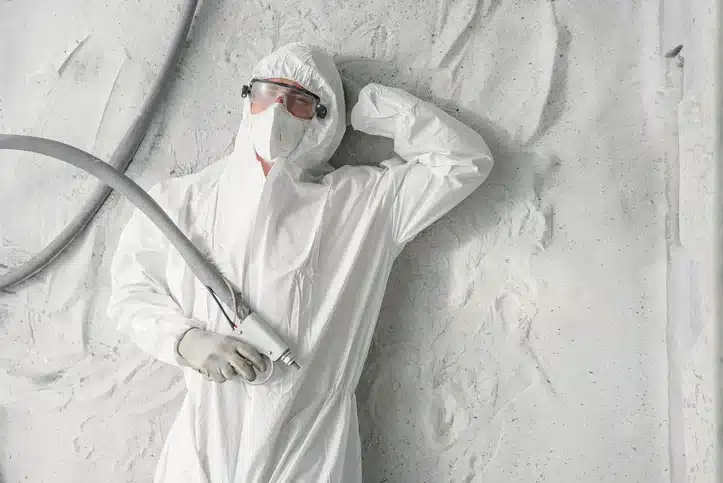
- Protective equipment: abrasive blasting can be a dusty and potentially dangerous process, especially if you're stripping surfaces covered with lead paint... It is therefore crucial to wear appropriate protective equipment : face shield, mask or full-face mask, coveralls, compressed air treatment for breathable air...
- Abrasive material: the type of abrasive material you choose will depend on the surface you want to strip and the desired results. Some common options include garnet, glass beads, sodium bicarbonate, or walnut shell, etc.
- Blasting cabinet: a blasting cabinet is an enclosed and ventilated space that allows for controlled abrasive blasting. It's ideal for smaller projects and provides a safer and cleaner environment for abrasive blasting.
The Satisfaction of Making the Right Choice of Blasting Machine! Discover below our selection of blasting machines equipped with the latest technologies!
Discover below the Cryoblaster® air abrasive blaster range


Abrasive Blasting Techniques
Abrasive blasting requires a certain level of skill and technique to achieve the desired results.
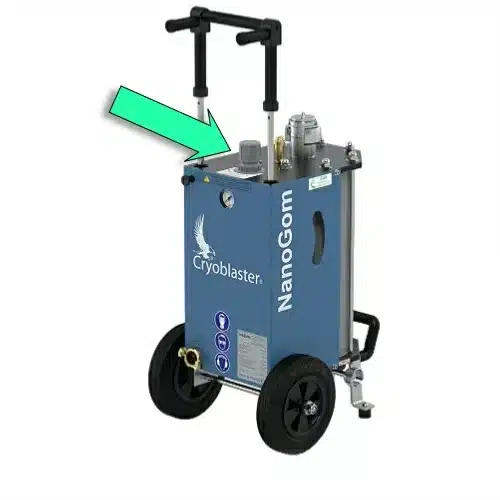
- Start with low pressure (0,5 to 3 bars): It's best to start with low pressure and gradually increase until you find the right level for your project. To do this, turn the pressure regulation dial of your blasting machine until the pressure gauge shows the desired pressure.
- Keep the nozzle moving: to avoid damaging the surface, keep the nozzle moving at all times. Holding the nozzle in the same spot too long can cause uneven blasting and potential damage: start the blasting system before the piece to be treated, and stop after the piece to be treated.
- Use the right abrasive material: as mentioned previously, the type of abrasive material you choose will depend on the surface and desired results. Make sure to choose the right material for your project.
- Wear protective equipment: Safety should always be the top priority when abrasive blasting. Make sure to wear protective equipment, including safety glasses, gloves, and a respirator, to protect yourself against the abrasive material and dust.
Applications of Abrasive Blasting
Abrasive blasting has a wide range of applications, making it a versatile and useful technique for various industries. Some common applications of abrasive blasting include:
- Automotive restoration and maintenance: abrasive blasting is commonly used to remove rust and paint from cars, trucks, and other vehicles.
- Industrial cleaning: abrasive blasting is an effective method for cleaning and preparing surfaces in industrial environments, such as factories and warehouses.
- Surface preparation for painting: abrasive blasting is an essential step in preparing surfaces for painting, as it removes old coatings and creates a clean surface for better adhesion.
- Graffiti removal: abrasive blasting can effectively remove graffiti from various surfaces, including concrete, brick, and metal.
- Wood restoration: abrasive blasting is a gentle and effective method for removing old paint and stains from wood surfaces, making it an ideal option for wood restoration projects.
In conclusion,
Abrasive blasting is a versatile and effective method for cleaning and preparing surfaces for various applications. By understanding the different types of abrasive blasting, the necessary equipment, and the techniques, you can achieve professional results and save time and effort on your next project.
Whether you're restoring a classic car or planning to refurbish a surface for painting, abrasive blasting is a valuable technique to have in your arsenal!


