
Cleaning and preserving historical monuments are complex tasks that require methods that are both effective and respectful of original materials. Recently, some companies specializing in dry ice cleaning have claimed that laser cleaning can cause color changes on treated surfaces, unlike dry ice blasting which allegedly does not have this undesirable effect. These claims raise crucial questions about the use of laser cleaning in heritage conservation and the need to objectively assess its impacts.
This article aims to examine whether laser cleaning actually changes the color of surfaces, particularly on monuments, based on scientific studies and practical cases. We will also discuss the advantages and limitations of laser cleaning compared to other methods, such as dry ice blasting, in order to provide a comprehensive analysis for conservation professionals and stakeholders involved.
Understanding laser cleaning
Le laser cleaning is a method non-contact method that uses pulses light beams of high power, focused to remove of dirt, deposits and unwanted layers on surfaces. The laser vaporizes or selectively removes selectively contaminants without affecting the underlying substrate. The laser parameters, such as wavelength (in nanometers), or pulse duration (in nanoseconds), energy (in watts) and frequency (in kilohertz), are crucial to ensure effective cleaning while minimizing minimizing risks to the treated surface.
Concerns regarding color modification
Hose concerns have been raised about the potential of laser cleaning to alter the color or appearance of treated materials. These concerns are particularly relevant for historical monuments, where any undesirable change can affect the the integrity aesthetic et heritage value of the artwork. Some dry ice cleaning professionals argue that laser cleaning generates color changes, unlike their method which would be free of such effects.

Case study: Laser cleaning of the wall paintings in the tomb of Neferhotep TT49
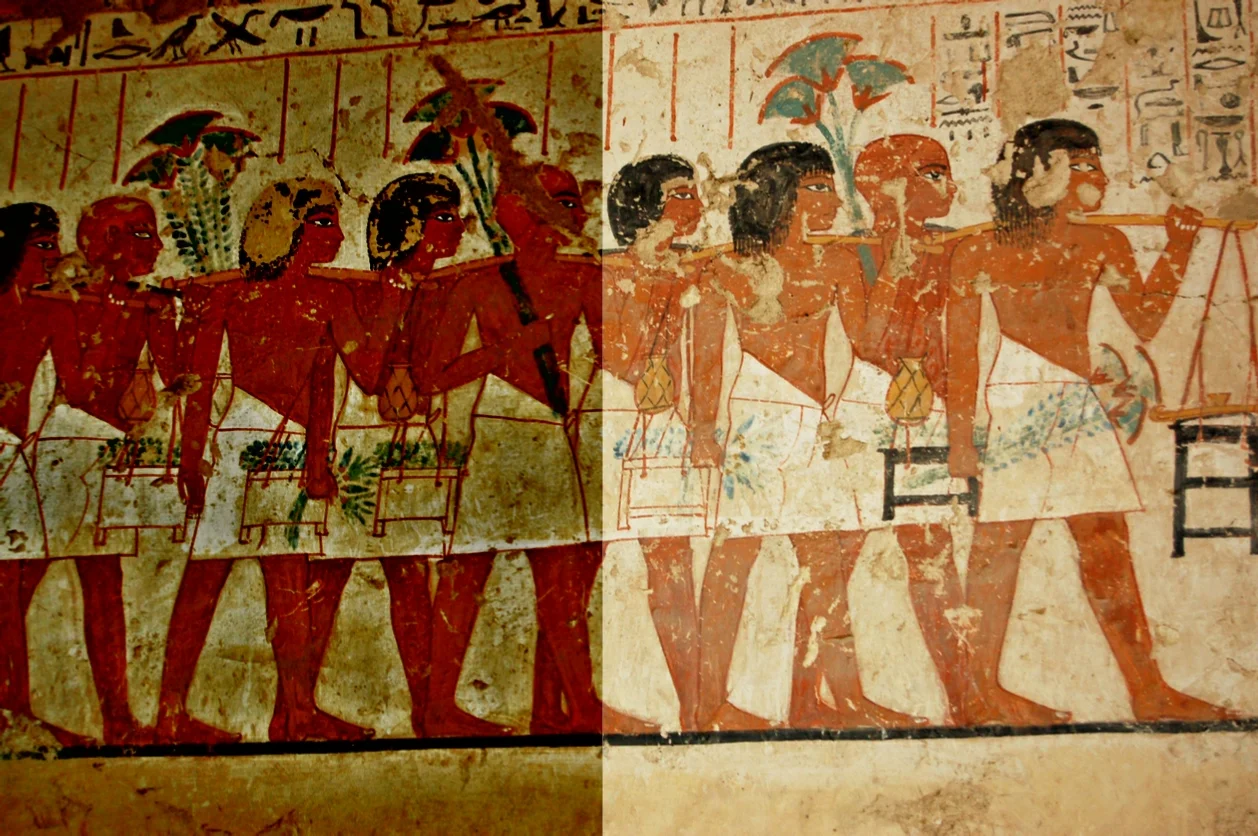
A study conducted by Susanne Brinkmann et Christina Verbeek explored the use of laser cleaning to restore ancient wall paintings in the tomb of Neferhotep TT49, located in the Thebes West necropolis in Egypt*. Dating from 1320 B.C., this tomb is decorated with rich decorations, but suffered significant damage, particularly due to thick layers of soot covering the paintings and stone surfaces.
Challenges encountered
- Soot accumulation : the burning of mummies inside the tomb left thick deposits of soot containing residues of fats, oils, and resins.
- Fragility of paintings : the paint layers were fragile, with loss of cohesion and flaking, particularly in areas pigmented with Egyptian blue and green.
- Ineffectiveness of traditional methods : previous attempts at mechanical and chemical cleaning had damaged the sensitive paintings without effectively removing the soot.
Introduction of laser cleaning
Faced with these challenges, laser cleaning was considered as a solution to reduce soot layers without damaging the underlying paintings. A portable laser was used to conduct thorough tests.
Test results
- Effective soot reduction : the laser successfully eliminated soot layers, revealing details of previously obscured paintings.
- Preservation of pigments : the pigments red, yellow et green were cleaned without color alteration. pigments Egyptian blue and greenwere also treated with success.
- Challenges with black pigments : the carbon-based black pigment presented challenges due to its absorption similar to that of soot. A particular approach, including the use of cyclododecane as temporary protection, was necessary.
- : rough or porous surfaces allow contaminants to lodge in cavities and micro-cracks, thereby increasing their mechanical adhesion. For example, rust on metal or peeling paint can increase the difficulty of cleaning by offering more anchor points for contaminants. : a thin transparent yellow layer remained on some surfaces after cleaning. Analysis indicated it was organic substances absorbed into the porous structure of the paintings, likely from the burning of mummies.
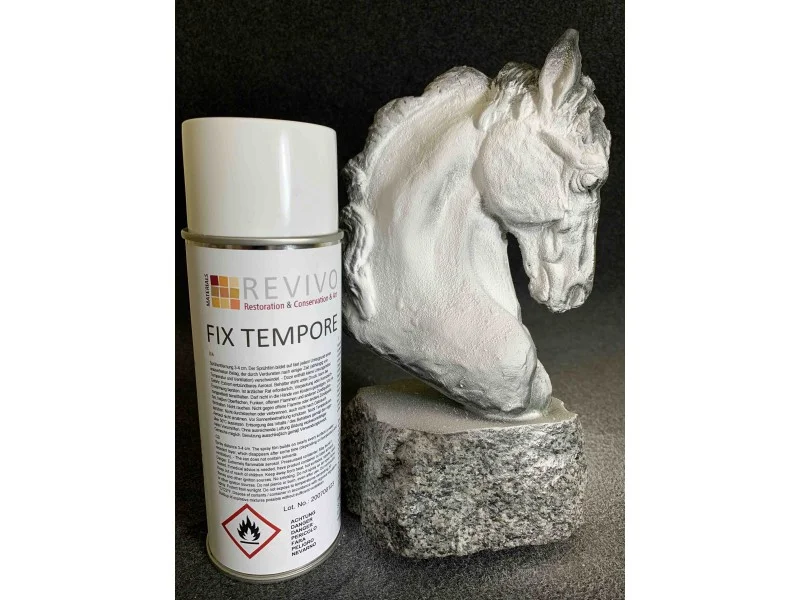
Cyclododecane spray: see website https://www.revivo.si/cyclododecane_400ml
Impact on the color of surfaces
The study demonstrated that, when correctly applied, laser cleaning does not alter the la color of waste, treated surfaces. The key factors to avoid color modifications are:
- Adjusted laser parameters : adjust the wavelength, the intensity of and at frequencies to match the specific characteristics of materials and contaminants.
- Preliminary testing : perform trials on small areas to determine the optimal settings and anticipate potential effects on color.
- Professional expertise : the operators must have in-depth knowledge of historical materials and and laser technology to ensure safe and effective treatment.
Comparison with dry ice blasting
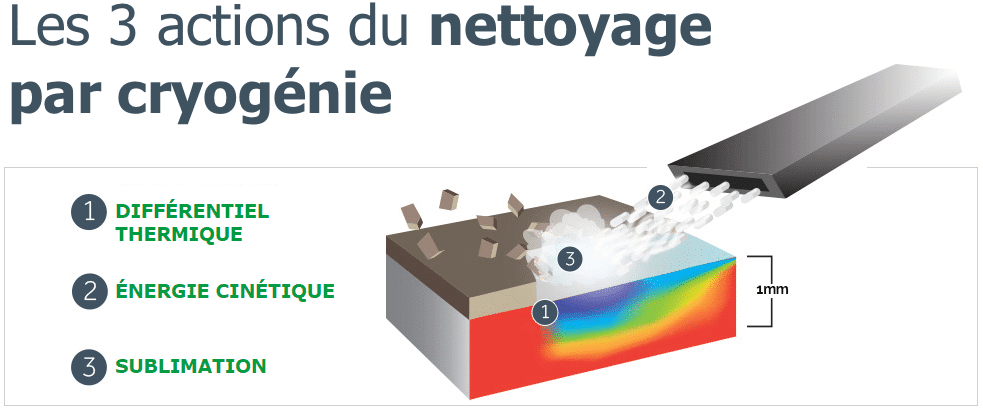
Le dry ice cleaning uses pellets of Carbon dioxide ice (solid CO₂) projected at high velocity to remove contaminants through thermal and mechanical shock. This method has several advantages:
- Non-abrasive when properly adjusted : dry ice blasting does not damage surfaces due to rapid CO₂ sublimation, but this requires depends on de parameters crucial parameters such as the particle size granularity of the dry ice and the pressure projection pressure.
- No secondary residue : the CO₂ sublimates into gas, leaving little or no residue to clean.
- Effectiveness on various soils : it is effective at removing fats, oils, and certain types of deposits.
However, dry ice cleaning also has limitations :
- Abrasion risk on soft surfaces : if the granularity of the dry ice and the projection pressure are not properly adjusted, this can lead to abrasion, particularly on more fragile or soft surfaces.
- Less precise control : it can be less selective than the laser, especially on delicate surfaces ou detailed explanations.
- Risk of thermal shock : can cause micro-cracks on materials sensitive to temperature variations.
- Difficult access to restricted areas : equipment can be cumbersome, limiting access to certain parts of monuments.
Comparison of impacts on color
- Laser Cleaning : when used correctly, laser cleaning does not modify the color of surfaces. Studies show that color changes are avoided through precise control of parameters and operator expertise.
- Dry ice cleaning : generally, it does not cause color modifications, but incorrect adjustment of granularity and projection pressure can result in abrasion, which could alter the appearance of sensitive surfaces. Additionally, the risk of thermal shock can affect certain sensitive materials, potentially altering their appearance.
This comparison highlights the importance of properly mastering the parameters of de each technique to avoid damaging surfaces and achieve optimal results.
Implications for monument cleaning
Conservation professionals must choose the cleaning method best suited to the specific characteristics of the monument and the types of contaminants:
- Materials and soils : The type of material (stone, metal, wood) and the nature of the soils determine the effectiveness and risks associated with each method.
- Required precision : Laser cleaning offers superior precision for fine details and delicate areas.
- Potential risks : Each method has its own risks, whether color modifications, mechanical or thermal damage.
In summary
Le laser cleaning: when used with caution and expertise, does not change the color of surfaces and can be a valuable tool for the conservation of historical monuments. The claims that laser cleaning generates systematically waste, color changes are not supported when considering available scientific studies and practical cases. It is essential to recognize that each cleaning method,whether laser cleaning, or abrasive blasting or dry ice blasting: has its advantages and its limitations.
Recommendations for safe use of laser cleaning:
- Collaborate with qualified professionals : Their expertise is essential for adjusting laser parameters and understanding the particularities of materials to be treated.
- Customize the approach : Each monument is unique; techniques must be adapted based on materials, conservation status, and types of contaminants.
- Conduct preliminary testing : Trials on small areas allow anticipation of laser effects and optimization of parameters.
- Consider an integrated approach : In some cases, combining laser cleaning with other methods, such as dry ice blasting, can provide optimal results.
In summary, choice of method de cleaning must be based on a comprehensive assessment of the monument's specific needs, types of soils, and potential risks. Laser cleaning remains an effective and safe option for heritage conservation when used appropriately.


