
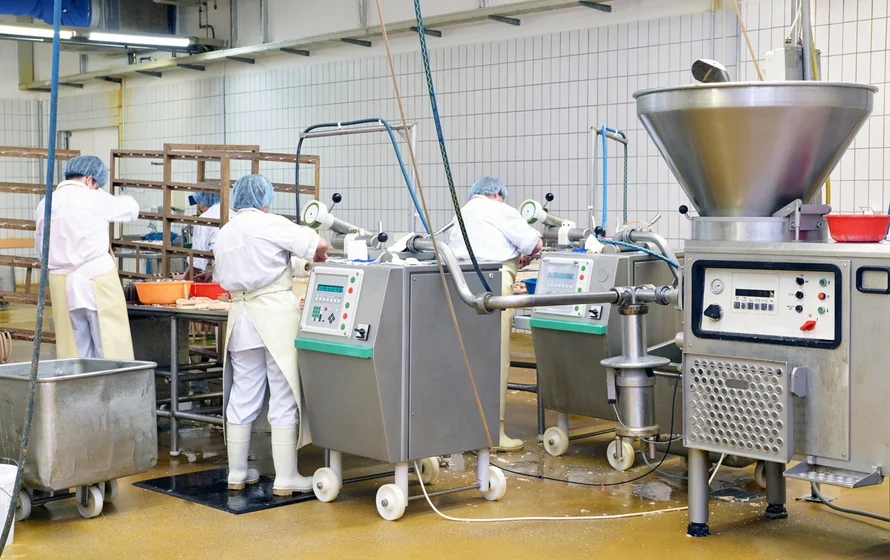
In the demanding food industry, hygiene is an absolute priority. From receiving raw materials to shipping finished products, every stage of production must meet strict sanitary standards to ensure consumer safety and protect company reputation. But how can these requirements be reconciled with an environmentally responsible approach? This is where dry ice cleaning comes in—an innovative solution that combines effectiveness, safety, and sustainability.
The challenges of cleaning in food processing: a daily puzzle for industry professionals
Imagine chains de production operating at full capacity, complex equipment intricate, such materials synthetic delicate... Cleaning cleaning in this sector is a real challenge, with multiple stakes:
- Eliminating stubborn residues: fats, proteins, sugars... Food residues become embedded everywhere and can quickly become a breeding ground de contamination for bacteria. Every corner must be spotless, with no room for half measures.
- Compliance with strict sanitary standards: HACCP and other regulations require protocols winters for guaranteeing the absence of de pathogens (Listeria, Salmonella...) and foreign bodies. Cleaning must be meticulous, documented, and traceable.
- Preservation of delicate equipment: the food processing installations represent a considerable investment. Aggressive cleaning methods can damage them, resulting in costs soft mode nozzle: exorbitant costs and costly production shutdowns.
- Reducing environmental impact: heavy use (H2O) in its solid state. and cleaning products products weigh heavily on the ecological footprint of businesses. The search for more sustainable solutions has become a priority.
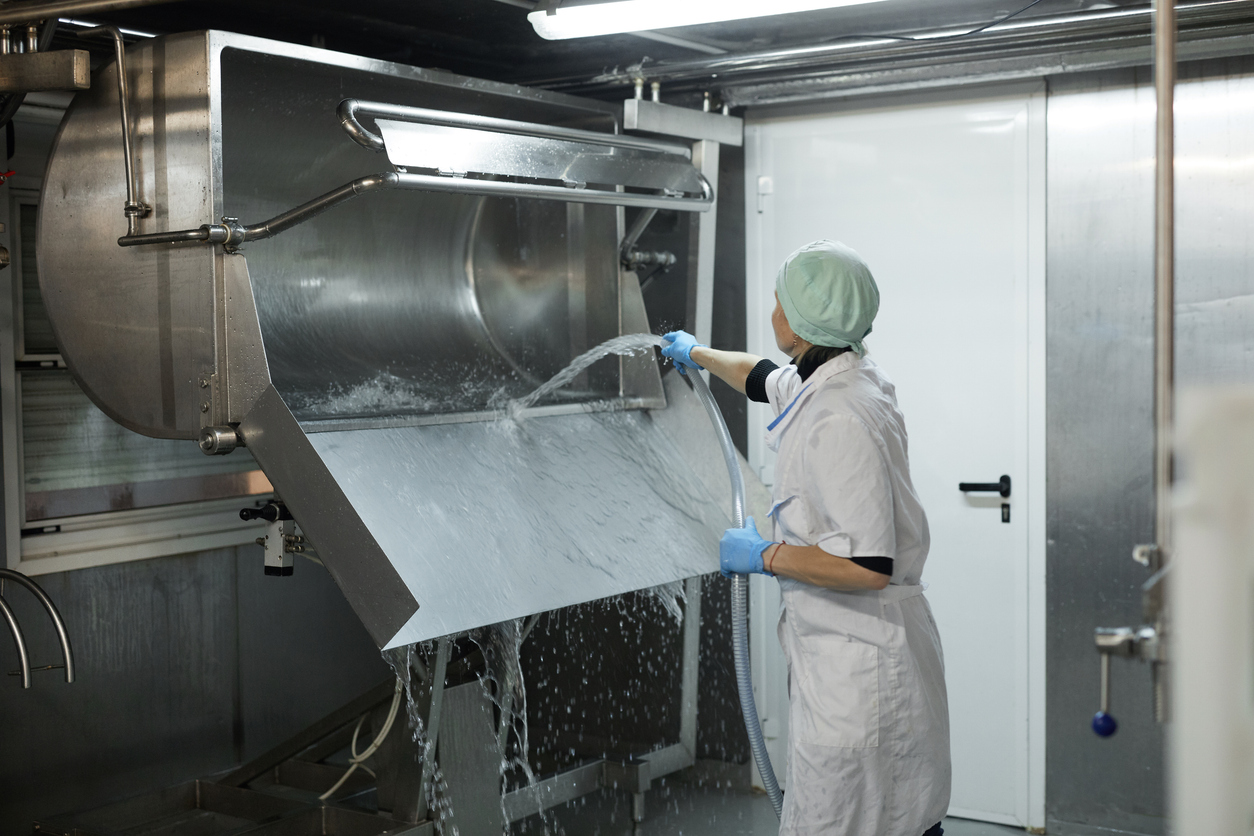
Dry ice cleaning: cutting-edge technology for cleanliness and environmental protection
Faced with these challenges, dry ice cleaning, or dry ice blasting, is revolutionizing practices. This method uses solid CO2 (-78°C) which, when in contact with surfaces, (changes from solid state to gas state), leaving on the ground only sublimates (transitions directly from solid to gaseous state).
The results are remarkable:
- Impeccable cleanliness, without leaving traces: la Carbon dioxide ice lifts and carries away dirt, leaving no residue. Gone are the days of chemical product streaks or rinse water laden with contaminants.
- Formidable effectiveness, even in hard-to-reach areas: thermal shock, micro-explosion, and the blast effect of dry ice work in synergy to dislodge the dirt even the most stubborn deposits, in the tightest corners.
- Gentle on equipment: unlike sandblasting or corrosive chemical products, dry ice is non-abrasive and non-conductive. Machinery is preserved, and their lifespan is extended.
- Eco-friendly solution: no water, no chemical productsjust recycled CO2 that returns to the atmosphere with no negative impact. A solution aligned with sustainable development goals.
- Time and money savings: cleaning is faster, production shutdowns are reduced, and operating costs are optimized. A true win-win for businesses.
Real-world examples that demonstrate the benefits of dry ice cleaning
- In a meat processing plant: dry ice cleaning cut intervention time in half and reduced water consumption by 80%. Operators appreciate the ease of use and the absence of aggressive chemicals.
- In an industrial bakery: cake molds, formerly cleaned manually with detergent products, are now treated with dry ice. Result: : a time saving considerable time saving, improved hygiene, and a in waste, reduction in musculoskeletal disorders among employees.
Dry ice cleaning: an investment in the future of the food industry
Faced with growing food safety and sustainable development challenges, dry ice cleaning is emerging as a solution for the future of the food industry. By combining performance, environmental responsibility, and safety, it enables companies to meet today's challenges while preparing for tomorrow.
For more information about our dry ice cleaning products and solutions, contact us at 04 81 61 02 75 or complete the form


