

Optimization and Maintenance of Compressed Air Systems
Picture this: you've invested in state-of-the-art dry ice blasting equipment, ready to transform your maintenance operations. But here's the thing—despite the promised power, the results fall short of your expectations. Why? Uncontrolled pressure loss silently undermining your system's effectiveness. In this article and video, we dive deep into this challenge, unveiling key strategies to compensate for this pressure drop and optimize your operations. From equipment selection to maintenance tips, through innovative calculation tools, discover how to turn this technical challenge into an improvement opportunity. Get ready to revolutionize your approach to cryogenic cleaning and propel your performance to new heights.
Understanding Pressure Loss
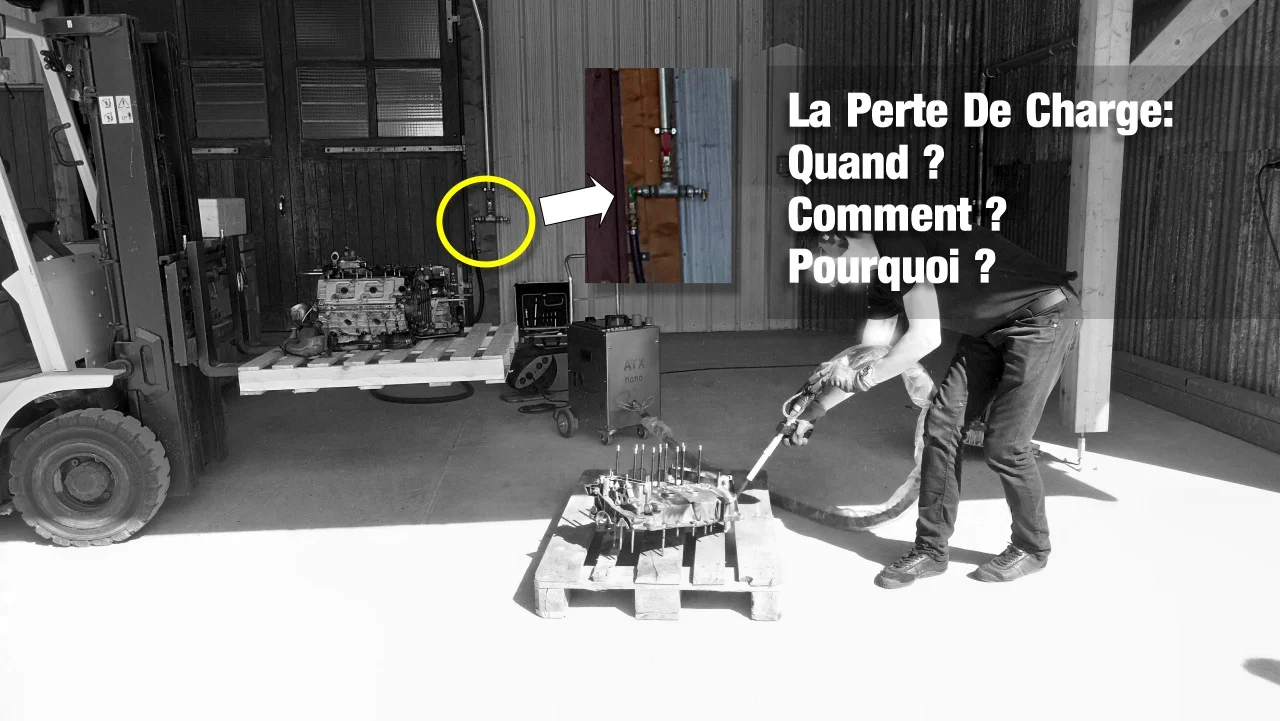
La pressure loss is a critical phenomenon to master in dry ice blasting systems. It occurs when compressed air, the vital element of the process, flows through system components: hoses, fittings, valves, and other accessories. This circulation creates friction and turbulence leading to progressive reduction of pressure.
In the context of your dry ice blasting, where pressure precision is paramount, this loss can have significantconsequences. Insufficient pressure at the nozzle exit candrastically reduce cleaning effectiveness, increase operation time and, consequently, costs: labor, dry ice, travel expenses... Compressed Air System Optimization
Choosing the Right Compressor
Compressor selection is the cornerstone of an efficient dry ice blasting system. They
stand out particularly in this field for several reasons: screw compressors Pressure Stability
- : they deliver constant pressure, essential for maintaining dry ice blasting effectiveness. Consistent Air Flow
- : stable air flow ensures uniform projection of dry ice particles. : modern models are designed to optimize energy consumption.
- Energy Efficiency : available in thermal or electric versions, they adapt to different work environments.
- AdjustabilityProper compressor sizing is critical. An undersized compressor won't deliver the necessary pressure, while an oversized model will result in unnecessary operating costs.
Correct Hose Sizing
Hose selection is just as important as compressor choice. Here are the key points to consider:
Adequate Diameter
- : hoses with sufficient diameter reduce air flow resistance, minimizing pressure loss. Too small a diameter creates restrictions, increasing pressure loss and reducing system efficiency. Optimized Length
- : minimize hose length whenever possible. Every additional meter contributes to pressure loss. Appropriate Material
- : choose materials with smooth interiors, such as aluminum or certain specialized plastics, which reduce friction. Flexibility vs. Rigidity
- : rigid hoses generally offer less pressure drop, but flexible hoses may be necessary for certain applications. Find the right balance. By paying close attention to these aspects, you'll lay the foundation for an efficient and high-performing dry ice cleaning system, capable of maintaining optimal pressure throughout the process.
Pressure Loss Calculation and Compensation
For precise pressure loss management, using specialized calculation tools is recommended. Kaeser, a leader in compressed air systems, offers a particularly useful online calculator for this task.
Effective compensation of pressure loss is essential to maximize your cold cleaning system's performance.
Discover our dry ice blasting solutions: equipment, services and training by contacting us at +33 (0) 4 81 61 02 75 or by filling out the form below


