
In the vast world of industrial cleaning, two technologies stand out for their effectiveness and innovation: dry ice blasting and dry steam cleaning. With over 22 years of experience in the industry, I offer you an in-depth look at the precise functioning and applications of these revolutionary methods. Understanding their principles will help you choose the solution best suited to your industrial needs. A. Romero
Dry Ice Blasting: A Cutting-Edge Technology for Cleanliness
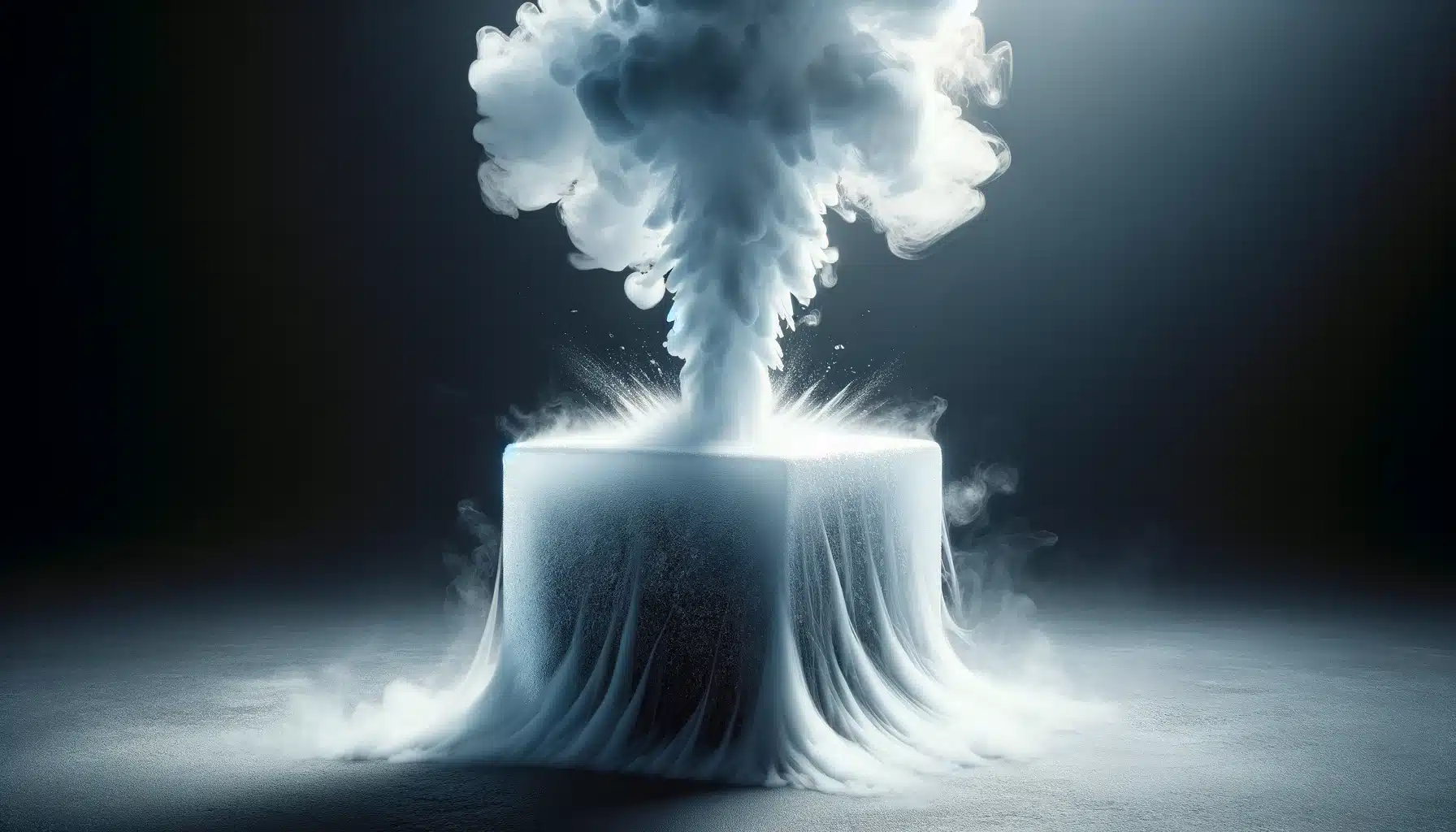
Le cryogenic cleaning uses Carbon dioxide ice, a solid form of carbon dioxide (CO2), as a cleaning agent. Projected at high speed using compressed air, the pellets dry ice particles strike the surface to be cleaned. This projection is carried out using a dry ice blasting machine, compressed air, a nozzle and a spray gun.
Upon contact with contaminants, they sublimates instantly, transitioning from solid to gaseous state. This phenomenon causes a micro-explosion that removes dirt from the surface without abrasion. The major advantage of this method lies in its ability to clean without without leaving any wet ou productsresidue, thus preserving the integrity of sensitive equipment.
Perfectly cleaning suited to demanding industries such as food and beverage, aerospace or even healthcare, dry ice blasting effectively eliminates greases, polymers, paints, without damaging delicate surfaces. Indeed, dry ice has the hardness of chalk.
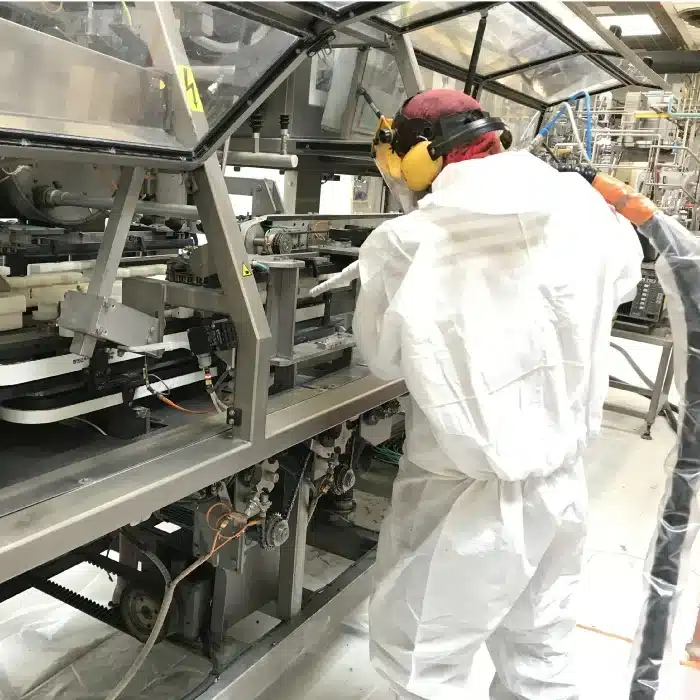
Dry ice blasting is recommended for food and beverage industry services...
Dry Steam Cleaning: Effectiveness and Versatility
Cleaning with dry steam, for its part, relies on the production of high-temperature steam (above 100°C), under high pressure. This steam, containing less than 5% water, possesses exceptional cleaning power. By penetrating of dirt, it breaks down and loosens contaminants on surfaces without saturating materials with moisture.
Dry steam is particularly effective for disinfecting, degrease et cleaning a multitude of surfaces, while being environmentally friendly. Used in various sectors, from restoration à the pharmaceutical industry, it enables deep cleaning without without resorting to chemical products, guaranteeing optimal hygiene.

Dry steam cleaning is also recommended for food and beverage industry services...
Dry Ice Blasting or Dry Steam: Which Technique to Choose?
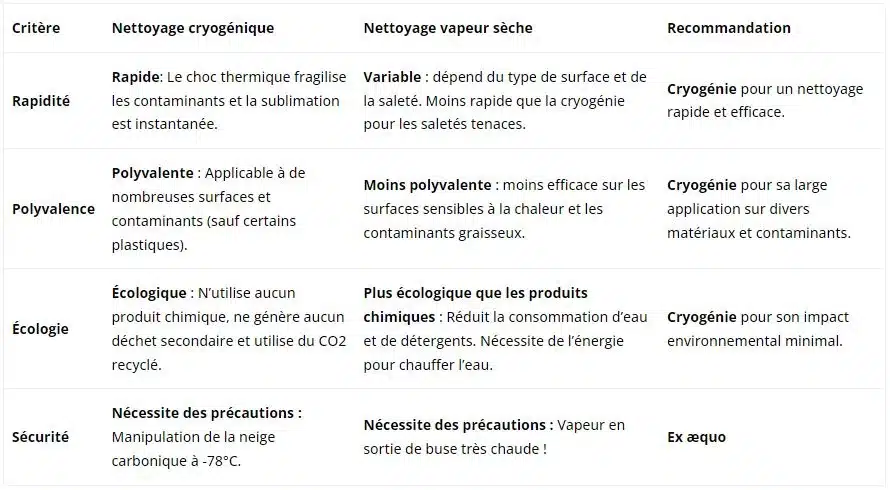
| capacity | Dry ice blasting | Dry steam cleaning | Recommendation |
|---|---|---|---|
| Speed | Fast : Thermal shock weakens contaminants and sublimation is instantaneous. | Variable : depends on the type of surface and dirt. Slower than dry ice blasting for stubborn soils. | Dry ice blasting for fast and effective cleaning. |
| Versatility | Versatile : Applicable to many surfaces and contaminants (except certain plastics). | Less versatile : less effective on heat-sensitive surfaces and greasy contaminants. | Dry ice blasting for its broad application across various materials and contaminants. |
| Environmental friendliness | Eco-friendly : Uses no chemical products, generates no secondary waste and uses recycled CO2. | More eco-friendly than chemical products: Reduces water and detergent consumption. Requires energy to heat water. | Dry ice blasting for its minimal environmental impact. |
| Safety | Requires precautions: Handling dry ice at -78°C. | Requires precautions: Steam exiting the nozzle is very hot! | Tied |
Choosing the best industrial cleaning technique
General recommendations:
- Dry ice blasting: opt for dry ice blasting if you're looking for fast, versatile and eco-friendly cleaning. This technique is ideal for sensitive surfaces and stubborn contaminants.
- Dry steam: choose dry steam for a more economical and safer solution. It's perfect for less demanding applications.
Important points to consider:
- The choice of technique depends on your specific needs. There is there is no one-size-fits-all solution, each technique having its own advantages and disadvantages.
- Compare different service providers and request quotes to get the best value for money. Don't hesitate to ask them about their experience and references.
- Preliminary tests may be necessary to determine the most effective technique for your particular case. This will allow you to ensure you get the best possible result.
Conclusion
These cleaning technologies, though different in their approach, both offer high-performance solutions that respect the materials being treated. The choice between dry ice blasting and dry steam cleaning will essentially depend on the nature of the dirt to be removed, the type of surface involved and the specific requirements of each industrial sector.
In summary, choosing the best industrial cleaning technique requires taking several factors into account. Don't hesitate to contact us (form below) if you need help selecting the solution best suited to your needs.


