

Dry ice blasting, also known as dry ice cleaning, is an effective method for removing dirt and contaminants without using water or chemicals. However, despite its many advantages, it is crucial to take precautions when cleaning certain electrical components. Some elements, often very sensitive or fragile, can be damaged by the impact of dry ice pellets or by the low temperatures generated during the process.
Electronic components sensitive to dry ice blasting
Here is a list de components for which precautions is are essential :
- Printed circuit boards: delicate circuits and components on printed circuit boards exposed to direct blasting risk being damaged by the force of dry ice pellets. It is strongly recommended to reduce the particle size of the projected pellets using a fragmentation nozzle or grinding device. Example: A printed circuit board with ceramic capacitors can be damaged if the dry ice pressure is too high.
- Sensitive electronic sensors: certain types of sensors, such as pressure sensors or accelerometers, are too fragile to be cleaned directly with dry ice. If the pollution layer is thin, cleaning with appropriate pressure and reduced dry ice particle size could be considered.
- Fine wire connections: very fine or delicate wire connections can be dislodged or damaged by dry ice blasting. It is advisable to perform multiple passes at low pressure lowparticle size to gradually remove the contamination.
- Optical components: lenses, fiber optic connections, and other optical elements must be protected or avoided during dry ice cleaning. The use of plastic covers is recommended.
- Static electricity-sensitive devices: specific precautions are necessary for components sensitive to static electricity. The use of adhesive nozzles projection anti-static and grounding of the component is critical.
- Thermal sensors: the intense cold of dry ice pellets can alter the calibration or operation of certain thermal sensors. A simple pass during dry ice blasting lowers the temperature of elements by an average of 8 to 12°. It is important not to overdo it on these elements.
- Unsealed bearings or moving parts: the force of cleaning can push contaminants deeper into unsealed bearings or other moving parts.

Best practices for dry ice blasting electrical components
When cleaning electrical components by dry ice blasting, it is important to:
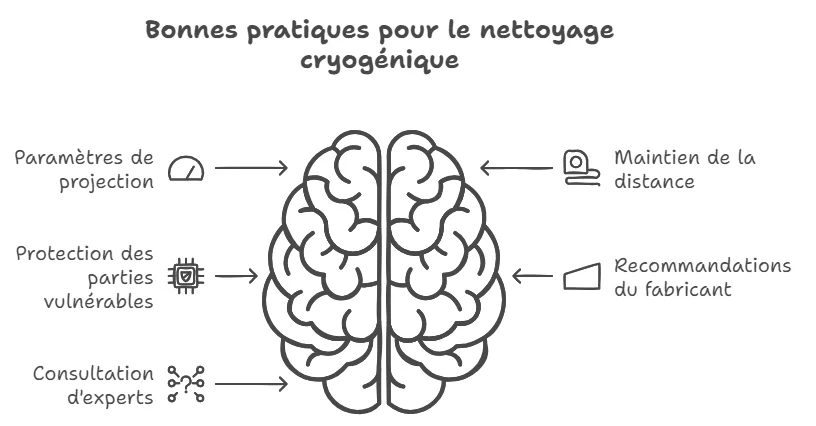
- Blasting parameters: use appropriate pressure settings, such nozzle types and such an particle size and dry ice grades suited to sensitive areas.
- Distance:maintain appropriate distance from components to be cleaned.
- Protection: protect vulnerable parts with barriers or coatings.
- Manufacturer recommendations: consult equipment manufacturer guidelines for specific cleaning recommendations.
For highly sensitive electrical equipment, alternative cleaning methods or specialized or techniques may be necessary. It is always preferable to consult experts familiar with both electrical equipment and dry ice blasting technology before proceeding with the cleaning of sensitive components. may be necessary. It is always preferable to consult experts familiar with both electrical equipment and dry ice blasting technology before proceeding with the cleaning of sensitive components.
Complementary techniques to dry ice blasting
For highly sensitive electrical equipment, alternative cleaning methods or specialized techniques may be necessary. Here are a few examples:
- Compressed air cleaning: use filtered compressed air to remove light dust and debris.
- Brush cleaning: use antistatic brushes for precise and delicate cleaning.
- Cleaning solvents: use cleaning solvents specific to electronic components, following safety precautions.
- Ultrasonic cleaning: for complex components, ultrasonic cleaning can be an effective solution.
It is always preferable to consult experts familiar with both electrical equipment and dry ice blasting technology before proceeding with the cleaning of sensitive components. See video below
Dry ice blasting video ATX20 - Model replaced by CryoGrinder Pro
Would you like to know more about dry ice blasting and its applications? Contact us for a personalized quote.


