
Dry ice blasting engine cleaning: a revolution in automotive maintenance
There are many traditional methods for cleaning and servicing an engine. In recent years, a new technique has emerged and grown in popularity: dry ice blasting using carbon dioxide ice, also known as dry ice or dry ice cleaning. In this article, we will explore this innovative method and its benefits for internal combustion engines and electric motors. This article and video are taken from the section Applications of dry ice cleaning.

- Industry : Auto Detailing
- Treatment purpose : BMW 2.40i - Engine
- Equipment used : ATX25-E V1
- Service Provider: Aero Ice (France)
What is dry ice?
La Carbon dioxide ice is simply solidified carbon dioxide (CO2). It is called "dry ice" because it transitions directly from solid to gaseous state without passing through the liquid phase, which prevents any risk of moisture or corrosion when in use. This compound has hardness similar to that of chalk, which gives it ideal abrasive properties to dislodge stubborn dirt without damaging surfaces.
Dry Ice Cleaning: How Does It Work?
La dry ice blasting technique consists of projecting dry ice particles onto the surface to be cleaned using a dry ice blasting machine. When coming into contact with contaminants, dry ice causes a thermal shock that makes them contract and crack. The abrasive particles of solid CO2 then sweep away these debris, leaving a clean surface free of residue.
The benefits of dry ice blasting for engines
Dry ice blasting offers several advantages over traditional engine servicing methods, whether for internal combustion engines or electric motors. Here are some of these benefits:
- Non-toxic and environmentally friendly: Dry ice is composed solely of carbon dioxide, a substance naturally found in the atmosphere. Unlike chemical solvents, it leaves no harmful residue when it sublimes, reducing environmental impact and health risks.
- Fast and effective cleaning: thanks to its hardness and "abrasive" properties, dry ice allows for rapid removal of dirt and contaminants from surfaces, even those in hard-to-reach areas. Furthermore, the thermal shock caused by contact between dry ice and dirt greatly facilitates its removal.
- No risk of damage: the relative gentleness of dry ice compared to other abrasives, combined with the absence of water and chemical solvents, allows for gentle cleaning of surfaces without risk of scratches or corrosion.
- Compatibility with electric motors: The dry nature of dry ice makes it an ideal solution for cleaning electronic components sensitive to moisture, such as electric motors, batteries, and control systems.
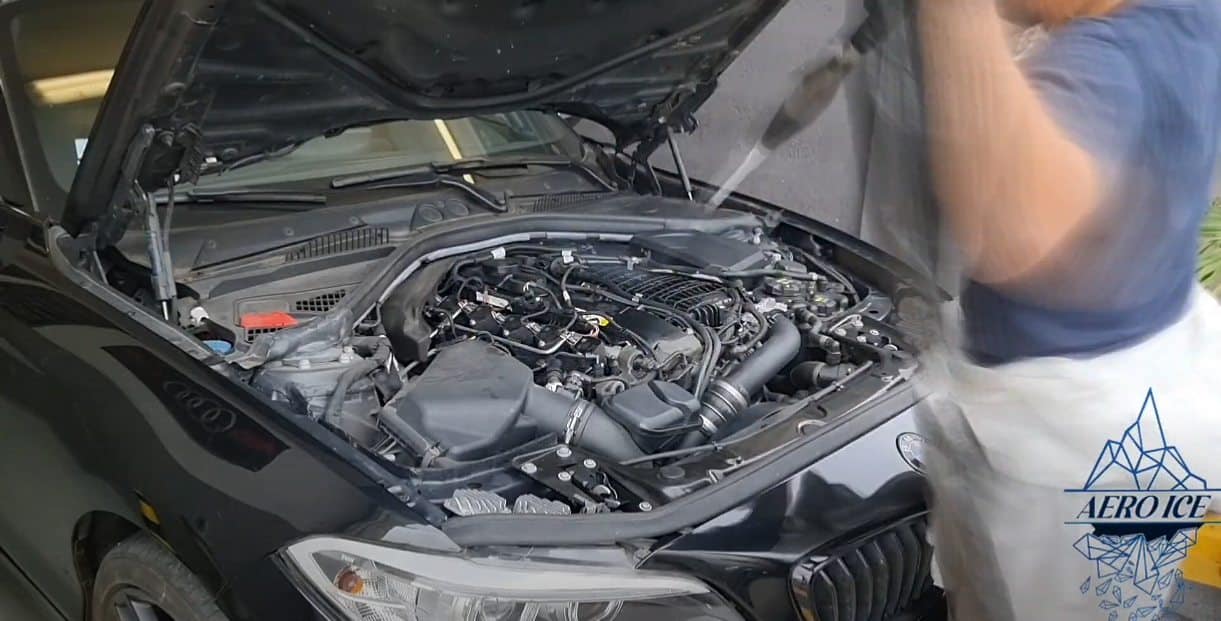
Dry ice blasting operation on BMW 2.40i by AERO ICE...
Applications of dry ice blasting in automotive
The versatility and effectiveness of dry ice blasting make it a method suited to several areas of automotive maintenance. Among the possible applications are:
- Cleaning internal combustion engines: dry ice allows engine blocks, cylinder heads, pistons, and other internal components to be freed from carbon deposits and oil residue without damaging surfaces or causing corrosion.
- Electric motor maintenance: The non-conductive and moisture-free properties of dry ice make it a valuable ally for cleaning electrical parts, such as coils, connectors, and sensors, which are essential for the proper functioning of electric and hybrid vehicles.
- Degreasing mechanical parts: workshops and garages can use dry ice to quickly and effectively degrease gears, bearings, chains, and other components requiring regular maintenance.
- Cleaning ventilation and air conditioning systems: dry ice blasting allows removal of dust, mold, and other contaminants that can accumulate in air ducts and affect the air quality inside the vehicle.
The future of dry ice blasting in the automotive industry
Given the numerous advantages it offers, dry ice blasting technique based on dry ice could well become the standard for engine maintenance and other automotive components. The increasing use of electric and hybrid vehicles makes this method all the more relevant, as it allows for cleaning that respects electronic elements sensitive to moisture.
In summary, dry ice cleaning with Carbon dioxide ice represents an innovative, ecological et effective alternative to traditional engine maintenance techniques. There is no doubt that this method will become increasingly present in garages and workshops as professionals and individuals become aware of its advantages.
Discover our dry ice cleaning solutions: equipment, services and training by contacting us at +33 (0) 4 81 61 02 75 or by filling out the form below


