


Dry ice blasting offers food processing facilities a dry, residue-free cleaning method that supports hygiene compliance and reduces downtime: understanding how it works, what it removes, and how to deploy it will help you assess whether it fits your operation.
How dry ice blasting works in food processing
Dry ice blasting uses compressed air to accelerate solid CO₂ pellets towards the surface being treated. The method delivers a dry, non-destructive cleaning process with no residual blasting medium left behind.
That matters in food processing, where you need effective contamination removal without damaging production assets. Because no drying or neutralisation step is required, equipment is ready to restart as soon as blasting ends, an advantage over both chemical wash-down and water-based cleaning methods.
The three-stage cleaning mechanism of ice blasting
Dry ice blast cleaning in food processing industries relies on three physical effects acting at the same time. First comes thermal shock: dry ice particles at −78.5°C hit the contaminant, causing it to contract, embrittle, and crack. Next, kinetic impact from pellets travelling at up to 290 m/s helps break the deposit away from the surface. Finally, dry ice sublimates on contact, expanding from solid to gas at roughly 1:400 to 1:700 and lifting loosened residue from the substrate.
These three effects act on the contaminant bond rather than the base material, which is what makes dry ice blast cleaning suitable for sensitive food processing equipment. In practice, the cleaning action is directed at the layer you need to remove, not the underlying component.
Once the process is complete, the removed material remains as a light, dry residue that can be swept or vacuumed away. No water or solvents are introduced, and there is no secondary blasting medium to collect, so waste handling is simpler and clean-up time is reduced.
Why sublimation makes dry ice blasting food-safe
Because dry ice sublimates directly into gas on impact, dry ice blast cleaning leaves no chemical residue, no liquid runoff, and no additional waste stream requiring specific disposal procedures. The result is measurable in dry surfaces and a cleaner post-process environment.
As a result, surfaces stay dry as soon as the dry ice cleaning step ends. That is especially important in the food industry, where residual moisture can remain in joints, crevices, and enclosed areas, increasing the risk of mould, mildew, and bacterial regrowth between production cycles.
The CO₂ used as the blasting medium is generally recovered as a by-product of other industrial activities, which supports sustainability objectives without altering the technical basis of the cleaning process. In complement to hygiene benefits, this gives you a cleaning medium that does not add water or chemical residues to the process. For a broader view of suitable dry ice blasting machines and ice cleaning systems, see dry ice cleaning food.
Non-abrasive action on food processing equipment
Dry ice blast cleaning is non-abrasive because the dry ice particles are relatively soft, with a hardness comparable to chalk. The right choice when evaluating sensitive applications is to focus on the contaminant bond: cleaning works when the cohesion of the deposit is lower than the damage threshold of the underlying material.
That means dry ice blasting can clean stainless steel, plastics, seals, gaskets, and sensors without scratching or wearing the surface. This is where it matters most for food processing equipment, since repeated industrial cleaning must preserve both hygienic condition and component life.
Surface temperature also affects performance. Hot equipment can often be cleaned 3 to 5 times faster than cold equipment because heat reduces contaminant adhesion; once production stops, you can use dry ice blasting machines to clean immediately instead of waiting for a full cool-down.
For food production plants, that shortens downtime and improves line availability. Beyond that, the same dry cleaning principle helps maintenance teams return equipment to service without adding a drying stage or secondary cleaning medium.
Food industry compliance and pathogen control with dry ice
Dry ice blasting supports hygiene requirements by reducing pathogens, removing allergens, and preserving equipment surfaces without introducing chemical residue. As a result, it is increasingly used in food industry cleaning and broader food processing environments.
Regulatory approvals for dry ice cleaning in food facilities
Dry ice cleaning food industry applications rely on food-grade dry ice recognised for use around food and in active production areas.
- FDA approval: The US Food and Drug Administration recognises food-grade CO₂ as safe for use in food processing and packaging environments, supporting deployment of ice blasting in food-contact and near-product areas.
- USDA certification: The US Department of Agriculture approves the use of dry ice in meat, poultry, and dairy facilities, which makes this approach relevant to high-risk production categories.
- CFIA recognition: The Canadian Food Inspection Agency confirms that food-grade dry ice meets food-contact standards, extending confidence across North American facilities and internationally benchmarked operations.
Beyond approvals, dry ice blasting technology is non-conductive and non-flammable. In practice, it can be used around motors, electrical components, and control panels that some water-based or chemical cleaning systems cannot reach without increasing operational risk.
Pathogen, biofilm, and allergen removal capabilities
For hygiene teams, the decisive question is what the process removes and how clean the surface is once treatment ends. Scientific evidence shows that dry ice cleaning can reduce surface levels of salmonella, E. coli, and Listeria monocytogenes to non-detectable levels using conventional microbiological methods.
In contrast with many standard cleaning methods, a dry ice blast also disrupts and removes biofilm. That is critical in shared production environments, because biofilm can protect contamination and increase the risk of transfer between product runs, including between allergen-containing and allergen-free zones. Once the process is complete, surfaces are left without added moisture or chemical trace, which supports controlled restart conditions in food processing.
Operator safety requirements during dry ice blasting
Mandatory personal protective equipment includes insulated gloves, eye protection, earplugs, and an FFP3 mask. The difference comes down to three physical effects: high-velocity pellets, very low temperature, and elevated noise levels create hazards that standard workwear does not address.
Ventilation is equally important. CO₂ is 1.5 times denser than ambient air and can collect at floor level, so air movement must be adequate for the volume of the area being treated. Check that extraction or ventilation is operating correctly before any intervention begins.
Training is required before any operator commissions the equipment. The nozzle must never be directed at people or animals, and a compatibility test on a discreet area is recommended before full application. The commissioning guide with video instructions covers each of these steps in sequence: dry ice cleaning food.
How to use dry ice blasting for cleaning food manufacturing equipment
Using dry ice blasting in a food processing environment relies on three points: suitable cleaning equipment, correct operating settings, and clean compressed air.
Choosing the right dry ice blasting machine
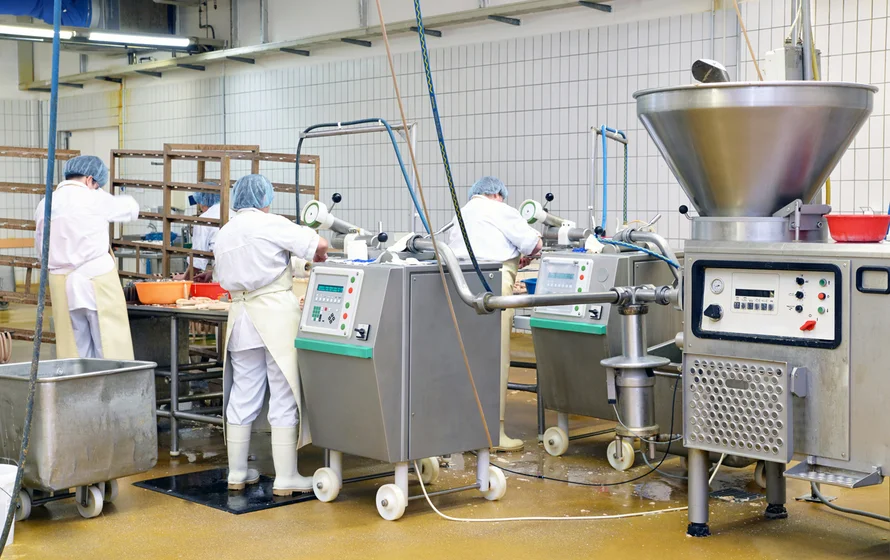
The choice of dry ice blasting machines depends on four practical factors: the type and level of contamination, the sensitivity of the surface, the compressed air available on site, and how often the equipment is cleaned. In practice, these variables determine whether a dry ice blaster can deliver stable, repeatable dry ice cleaning without damaging components or interrupting production because of insufficient air flow.
Cryoblaster® dry ice blasting machines cover a broad range of food industry needs through three core models, each adapted to a specific operating context in food manufacturing facilities.
| Model | Best suited for | Dry ice consumption | Key feature |
| ATX nano | Small to medium food industry surfaces | 0–35 kg/h | Compact and versatile for varied tasks |
| ATX nano DS | Demanding environments requiring precision | 0–35 kg/h | Digital display for fine, repeatable settings |
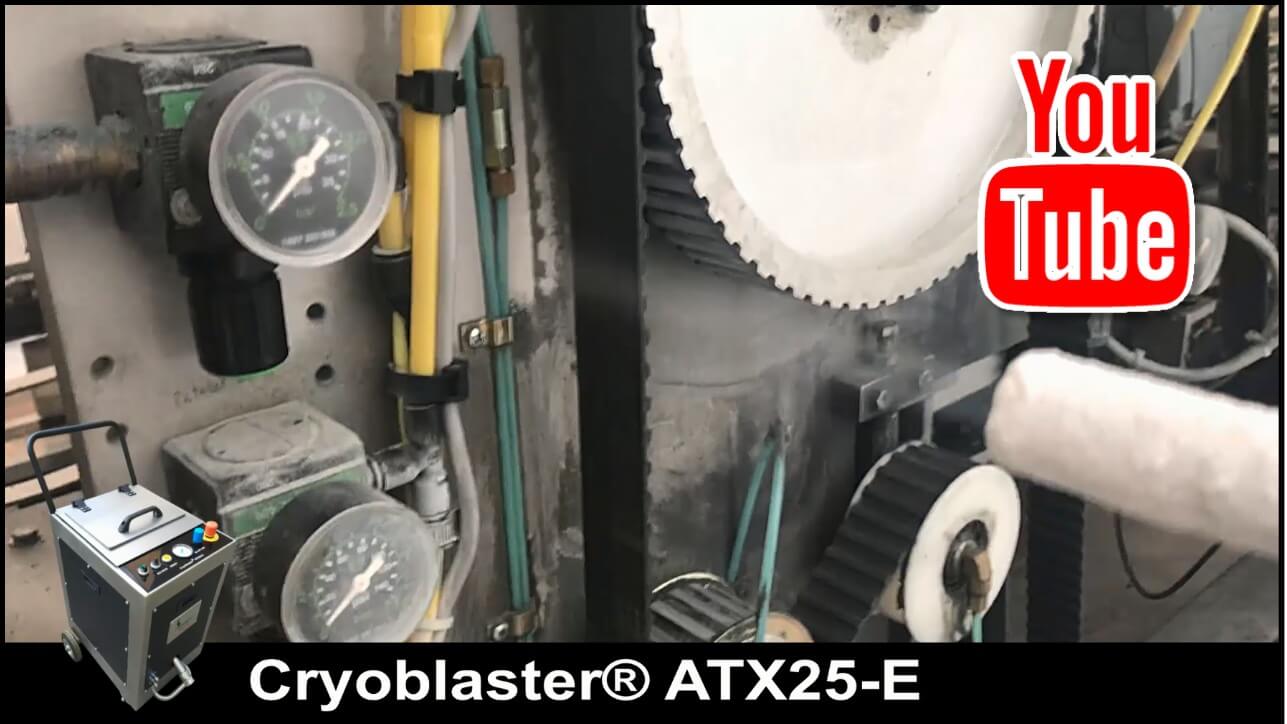
| ATX25-E | Intensive corrective cleaning of all surface types | 0–75 kg/h | High-output for large food processing facilities |
The ATX25-E operates as a single-hose dry ice blaster. It uses a rapidly cycling airlock system rather than a pressurised hopper, which allows longer hose runs with limited pressure loss: the difference comes down to easier access to remote or overhead production infrastructure without moving the machine repeatedly.
Setting pressure, flow, and nozzle for food applications
The primary adjustment for clean, controlled results is pressure. Sensitive components such as sensors, labellers, and wrappers are generally cleaned at 4 to 8 bar, while heavier fouling on ovens, conveyors, and mixers may require up to 16 bar.
Air volume is just as important. Most food industry applications need at least 4,000 l/min at 6 bar, and around 85% of tasks fall between 6 and 7 bar with 4,000 to 5,000 l/min available.
Nozzle orientation then refines access: 45°, 90°, and similar angles help reach confined areas, internal cavities, and the underside of conveyors without dismantling the line. Beyond that, the spray mode can be set to soft, medium, targeted, or corrective according to the surface and contamination level, while the dry ice pellet feed rate is adjusted through the consumption regulator to control use and limit waste.
Air quality and dry ice supply requirements
The supply must include effective moisture separation and oil filtration so that dry ice blasting does not project unwanted contaminants onto food-contact surfaces.
Existing compressor installations are often suitable once filtration meets food-safe requirements and pressure is checked before each cleaning session. That is the right choice when a site wants to integrate dry ice cleaning into established maintenance routines without redesigning the whole air network.
The dry ice itself must also be suitable for the application. Food-grade dry ice should be certified by the supplier for food-contact use, and delivery planning should match sanitation windows so the supply remains stable for food processing operations.
Once the process is complete, dry ice blasting leaves no secondary blasting media to recover because the dry ice pellets sublimate on impact dry ice cleaning food.
Dry ice blasting food industry applications and efficiency gains
The practical value of ice blasting in food manufacturing goes well beyond surface appearance. In the food industry, the gain is operational as much as hygienic: faster turnaround, broader equipment coverage, and a cleaning process that limits interruption to production.
Food sectors and equipment cleaned by ice blasting
Dry ice blasting food industry applications extend across the full food and beverage chain. You see it in commercial bakeries removing caked dough and starch, in meat and poultry plants tackling fat and protein deposits, and in chocolate production where caramelised sugar and dairy residues build up on precision moulding systems.
- Beverage and dairy production: ice blasting removes mineral deposits, fatty acids, and yeast residues from fillers, pasteurisers, and cold storage infrastructure without adding moisture or chemical agents to sensitive production areas.
- Snack food and bakery manufacturing: conveyors, ovens, and mixers collect carbonised oils and baked-on seasoning; dry ice blast cleaning removes these deposits efficiently, including on hot equipment between production runs.
- Frozen food and coffee processing facilities: ice blasting technology reaches internal machine cavities, ductwork, and overhead pipe networks in cold storage and roasting environments where water-based cleaning methods create unacceptable moisture or temperature risks.
Production equipment cleaned by dry ice cleaning includes mixers, blenders, slicers, roasters, conveyors, baggers, labellers, mills, palletisers, motors, and control panels. In complement, the same dry ice blasting process can be used on facility surfaces such as floors, walls, ceilings, ducts, and pipes, without drainage systems or chemical handling protocols.
Reducing downtime and contamination response time
Because dry ice blast cleaning does not introduce water or chemical residues and often reduces the need for equipment disassembly, many tasks can be completed without extended cooling periods or prolonged shutdowns: deep cleaning that once took days can often be carried out in hours.
In contamination events, including pathogen findings, allergen cross-contact incidents, or recall response scenarios, dry ice blasting supports a faster return to service. Conventional industrial cleaning typically adds time-consuming steps: drying, chemical neutralisation, and surface recovery. With carbon dioxide cleaning, those stages are largely removed from the workflow.
Cost and sustainability advantages for food manufacturers
Dry ice cleaning uses food-grade dry ice as the consumable medium. As a result, the cleaning process avoids the routine use of multiple chemical cleaners, reduces water consumption, and limits the disposal burden linked to chemical effluent. For many sites, the result is measurable in lower overall industrial cleaning programme costs over time.
As a result, sites can avoid drainage infrastructure, water recovery systems, and wet-area controls that conventional cleaning methods require. This makes dry ice blasting particularly practical in confined spaces and elevated areas where introducing water or chemicals would require additional containment and recovery measures.
Frequently asked questions
Is dry ice safe to use in food processing environments?
Yes. Food-grade dry ice is approved by the FDA, USDA, and CFIA for use in active food processing and food production plants. In practice, dry ice blasting is well suited to these environments because dry ice sublimates on impact: it leaves no chemical residue, no water, and no secondary waste on food-contact surfaces.
The CO₂ used in dry ice blasting technology is colourless, tasteless, and odourless, so it does not affect product quality or food safety. Once the process is complete, the main operating requirement is ventilation, since CO₂ can accumulate at floor level; operators must also use the required PPE throughout the dry ice blast operation.
What types of contamination does ice blasting remove in food facilities?
Ice blasting removes a wide range of contamination found across the food industry. This includes carbonised food particles, burnt-on residues, protein build-up, grease and oils, fats and fatty acids, caramelised sugar, starch deposits, seasoning residues, caked dough and batter, yeast and mould growth, dairy residues, and allergen particles such as soy and pea protein.
Beyond visible soils, ice blasting technology also targets biofilms and helps reduce pathogen loads, including salmonella and listeria, to non-detectable levels.
How does dry ice blasting compare to water-based cleaning methods in food manufacturing?
The difference comes down to moisture, waste, and downtime. In contrast with water-based cleaning systems, dry ice blasting leaves surfaces completely dry. That absence of residual moisture limits bacterial and mould regrowth in crevices between cleaning cycles.
Water-based cleaning methods can also drive protein powders and allergen dust deeper into machine cavities, where they harden into crusted deposits. Dry ice blasting avoids that issue and does not require drainage infrastructure, chemical disposal procedures, or long drying periods before restart. The result is measurable: shorter cleaning cycles and fewer secondary contamination risks in food processing environments.